


Po vsej Evropi več gospodinjstev kot kdaj koli prej namešča balkonske sončne sisteme. Vladne spodbude, naraščajoče cene električne energije in vse večje sprejemanje dinamične tarife za električno energijo so lastnike domov spodbudili k proizvodnji, shranjevanju in uporabi več lastne obnovljive energije.
Ker majhni stanovanjski sončni sistemi postajajo vse bolj pogosti, se pojavlja še en izdelek: domače baterije tipa »plug-and-play«. Zasnovane so za shranjevanje presežne sončne energije ali cenejše električne energije iz omrežja za kasnejšo uporabo in obljubljajo enostavnejšo alternativo tradicionalnemu stanovanjskemu shranjevanju v baterijah.
Vendar pa ne vsak izdelek, ki se trži kot »plug-and-play«, deluje enako. Ali je res mogoče vsako domačo baterijo priključiti v standardno stensko vtičnico? Ali potrebujete električarja? In kako veste, katera vrsta je prava za vaš dom?
Ta priročnik odgovarja na najpogostejša vprašanja in pojasnjuje, na kaj morate biti pozorni, preden izberete baterijo za vaš stanovanjski sončni sistem in sistem za shranjevanje energije, ki deluje po principu "plug-and-play".
Kaj naredi domačo baterijo resnično "plug-and-play"?
A Domača baterija »plug-and-play« je zasnovana za integracijo z obstoječim domačim energetskim sistemom, ne da bi morali lastniki stanovanj preoblikovati ali obnoviti celotno instalacijo.. Namesto zamenjave večjih komponent ali obsežnega spreminjanja električnih povezav deluje z združljivimi sončnimi paneli, mikroinverterji in električnim omrežjem prek standardiziranih vmesnikov.
Za lastnike domov to pomeni, da je dodajanje baterijskega shranjevanja obstoječemu sončnemu sistemu lahko veliko preprostejše kot namestitev tradicionalnega stanovanjskega baterijskega sistema. Namesto ustvarjanja popolnoma nove električne infrastrukture je rešitev »plug-and-play« zasnovana tako, da deluje s sistemom, ki ga že imate.
Vendar pa je plug-and-play ne pomeni, da je mogoče vsako baterijo preprosto priključiti na katero koli gospodinjsko vtičnico, kot je grelnik vode ali kavni aparat. Izraz se nanaša na poenostavljeno sistemsko integracijo in združljive povezave. Glede na izdelek, način povezave in lokalne predpise bodo morda še vedno potrebna nekatera strokovna električna dela za zagotovitev varnega in skladnega delovanja.
V primerjavi s tradicionalnimi stanovanjskimi baterijskimi sistemi rešitve »plug-and-play« običajno zahtevajo manj korakov namestitve, manj električnih del in manjšo začetno kompleksnost. Zaradi tega so še posebej primerne za stanovanja, manjše hiše, projekte prenove in gospodinjstva z obstoječimi sončnimi sistemi.
Ključne razlike so povzete spodaj.
| Funkcija | Domača baterija Plug-and-Play | Tradicionalna domača baterija |
|---|---|---|
| Namestitev | Poenostavljena namestitev z manj ločenimi komponentami | Običajno je potrebna profesionalna namestitev |
| Električna dela | Običajno omejeno, odvisno od števca in načina priključitve | Obsežnejše ožičenje in električna integracija |
| Najbolj primerno za | Stanovanja, manjše hiše in obstoječi sončni sistemi | Veliki strešni fotonapetostni sistemi in inštalacije za celotno hišo |
| Začetna naložba | Na splošno nižje | Običajno višje zaradi stroškov opreme in namestitve |
| Prilagodljivost | Pogosto lažje prenoviti, preseliti ali razširiti | Običajno zasnovan kot trajno nameščen sistem |
| Glavni cilj | Povečajte lastno porabo z manjšo zahtevnostjo namestitve | Zagotovite celovito upravljanje z energijo v celotnem domu |
Za gospodinjstva z velikimi strešnimi solarnimi sistemi in veliko porabo električne energije je tradicionalni stanovanjski baterijski sistem morda še vedno boljša izbira. Vendar pa za številne evropske lastnike domov, ki želijo shraniti presežno sončno energijo, preusmeriti porabo električne energije na obdobja z nižjimi stroški in se izogniti zapleteni namestitvi, rešitev »plug-and-play« ponuja dostopnejšo alternativo.
Preden izberete sistem »plug-and-play«, je koristno razumeti, kako se domača baterija polni, shranjuje elektriko in sprošča energijo za gospodinjsko uporabo. Preberite naš vodnik: Kako deluje domača baterija? Razlaga načela.
Na kaj morate biti pozorni pred nakupom?
Vse domače baterije tipa »plug-and-play« ne ponujajo enake izkušnje. Namesto primerjave samo zmogljivosti upoštevajte, kako se bo celoten sistem obnesel pri vsakodnevni uporabi.
Zmogljivost shranjevanja
Izberite baterijo, ki ustreza vaši dnevni porabi energije in količini presežne električne energije, ki jo ustvari vaš sončni sistem. Večja baterija lahko shrani več energije, vendar prevelika baterija ni vedno stroškovno najučinkovitejša izbira.
Če niste prepričani, koliko prostora za shranjevanje vaše gospodinjstvo dejansko potrebuje, si oglejte naš vodnik. Kakšno velikost domače baterije potrebujem? pojasnjuje, kako oceniti primerno kapaciteto baterije na podlagi dnevne porabe električne energije, proizvodnje sončne energije in načrtov za prihodnjo širitev.
Izhodna moč
Zmogljivost shranjevanja vam pove, koliko energije lahko baterija shrani, medtem ko izhodna moč določa, koliko električne energije lahko hkrati proizvede. Baterija ima lahko dovolj zmogljivosti za delovanje naprav več ur, vendar se mora njena izhodna moč še vedno ujemati s skupno obremenitvijo priključenih naprav.
Dobro uravnotežena kombinacija zmogljivosti shranjevanja in izhodne moči zagotavlja boljšo vsakodnevno zmogljivost kot osredotočanje samo na zmogljivost.
Združljivost z izmenično sklopko
Baterija, povezana z izmeničnim tokom, ima svoj sistem za pretvorbo energije in se priključi na izmenično stran gospodinjskega energetskega sistema.Zaradi tega je še posebej uporaben za projekte prenove, saj ga je pogosto mogoče dodati brez zamenjave obstoječega sončnega razsmernika.
Pred nakupom preverite, ali je baterija združljiva z vašim obstoječim PV sistemom, mikroinverterjem, števcem električne energije in gospodinjskim priključkom.
Tehnologija baterij LiFePO4
LiFePO4 baterije se zaradi dolge življenjske dobe, toplotne stabilnosti in zanesljivega vsakodnevnega delovanja pogosto uporabljajo v stanovanjskih shranjevalnikih energije. Primerne so za aplikacije, ki zahtevajo pogosto polnjenje in praznjenje.
Pametno upravljanje z energijo
Funkcije, kot so spremljanje aplikacij, urniki polnjenja, integracija števcev električne energije in samodejno upravljanje energije, lahko gospodinjstvom pomagajo učinkoviteje uporabljati shranjeno električno energijo.
Te funkcije so še posebej uporabne za gospodinjstva z dinamičnimi tarifami za električno energijo. Baterija se lahko polni, ko je elektrika iz omrežja cenejša, in zagotavlja shranjeno elektriko, ko so tarife višje, če sistem podpira potrebne funkcije načrtovanja in krmiljenja.
Razširljivost
Potrebe vašega gospodinjstva po energiji se lahko sčasoma spremenijo. Izbira sistema, ki podpira prihodnjo širitev, lahko olajša dodajanje shranjevalnih zmogljivosti ali integracijo dodatne sončne energije pozneje.
WattCycle 2,5 kW večnamenski sistem za shranjevanje energije z izmeničnim tokom za evropske domove
Če iščete rešitev »plug-and-play«, zasnovano za evropska gospodinjstva, razmislite, ali sistem združuje poenostavljeno namestitev, združljivost z izmeničnim tokom in inteligentno upravljanje energije.
The WattCycle 2,5 kW večnamenski sistem za shranjevanje baterij z izmeničnim tokom je zasnovan za evropske stanovanjske aplikacije za shranjevanje energije. Njegova AC-sklopljena arhitektura omogoča delovanje z združljivimi obstoječimi sončnimi fotonapetostnimi sistemi in mikroinverterji, ne da bi bilo treba zamenjati originalni sončni inverter.
S priloženim števcem električne energije, ki ga namesti usposobljen električar, lahko sistem spremlja pretok električne energije v gospodinjstvu in upravlja polnjenje in praznjenje glede na izbrani način delovanja. Njegova integrirana zasnova prav tako zmanjšuje število ločenih komponent in priključkov, ki jih običajno potrebujejo tradicionalne stanovanjske baterijske instalacije.
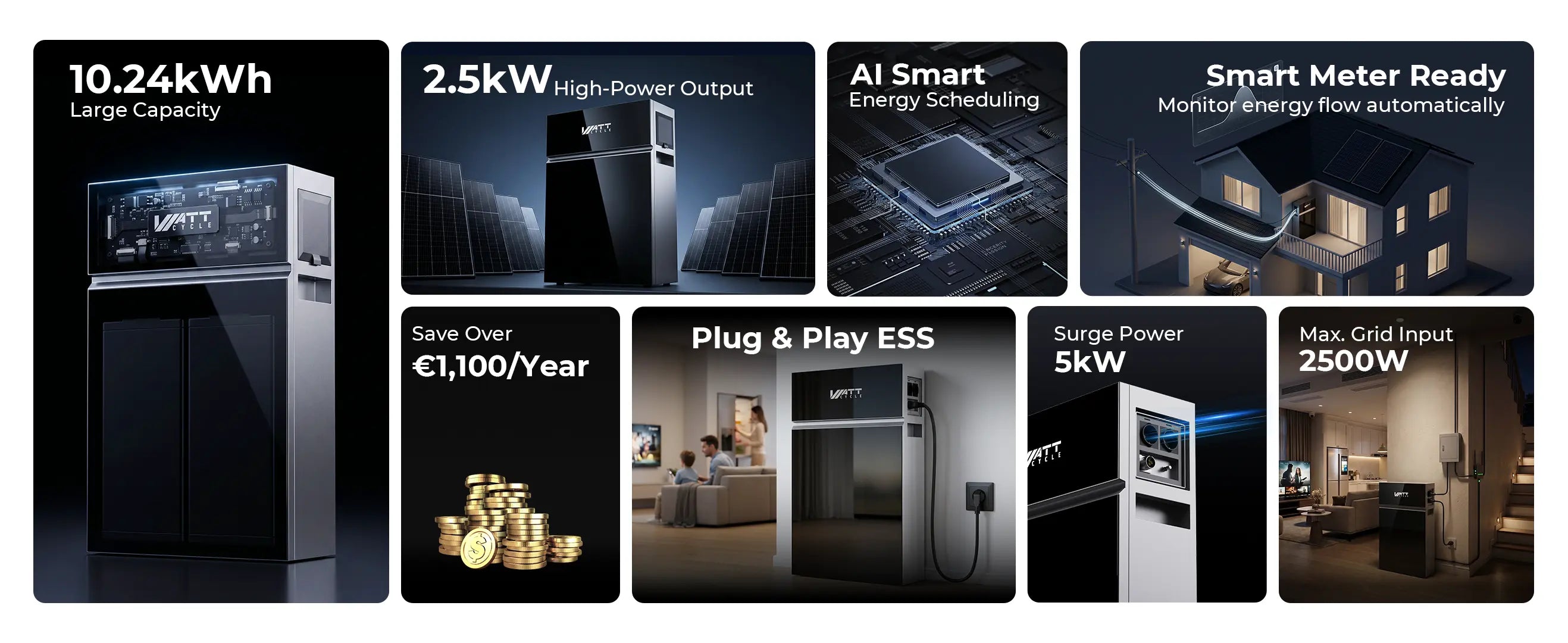
Zakaj ustreza konceptu "plug-and-play"
- Poenostavljeno upravljanje z vključenim števcem električne energije – Ko usposobljen električar namesti električni števec in je sistem pravilno konfiguriran, lahko baterija spremlja porabo električne energije v gospodinjstvu in samodejno upravlja energijo.
- Arhitektura sistema, sklopljenega z izmeničnim tokom – Sistem se priključi na izmenično stran domačega energetskega sistema, zaradi česar je primeren za dodajanje shranjevalne energije združljivim obstoječim sončnim instalacijam.
- Združljiv vmesnik mikroinverterja – Namenska povezava z mikroinverterjem podpira integracijo z združljivimi stanovanjskimi sončnimi sistemi.
- Integrirana večnamenska zasnova – Sistem združuje razsmernik, sistem za upravljanje baterij, LiFePO4 baterijske module, komunikacijski modul, omrežni vmesnik, vmesnik za obremenitev in vmesnik za mikrorazsmernik v eni rešitvi za shranjevanje energije.
- Prilagodljivi načini delovanja – Načina PV Priority in Grid Priority uporabnikom omogočata prilagoditev polnjenja in praznjenja sončni proizvodnji, povpraševanju gospodinjstev in tarifnim pogojem električne energije.
- Pametno upravljanje z energijo v gospodinjstvu – Podatki števca električne energije omogočajo sistemu prilagajanje pretoka energije glede na porabo gospodinjstva in izbrane nastavitve krmiljenja.
- Rezervno napajanje za priključene obremenitve – Med izpadom omrežja lahko sistem napaja združljive priključene obremenitve iz shranjene energije baterij, odvisno od konfiguracije sistema in omejitev izhodne moči.
Če želite podrobneje raziskati sistem, vključno z njegovo AC-sklopljeno arhitekturo, namestitvijo, ključnimi funkcijami in gospodinjskimi aplikacijami, preberite naš vodnik: Predstavitev izdelka: WattCycle 2,5 kW večnamenski sistem za shranjevanje baterij z izmeničnim tokom.
Pogosto zastavljena vprašanja
Ali je mogoče vsako domačo baterijo priključiti v standardno stensko vtičnico?
Ne. Tradicionalni domači baterijski sistemi običajno zahtevajo profesionalno namestitev in neposredno integracijo z domačim električnim sistemom. Izdelki, opisani kot "plug-and-play", so zasnovani za poenostavitev namestitve, vendar jih je treba še vedno priključiti v skladu z navodili proizvajalca in lokalnimi električnimi predpisi.
Ali je domača baterija tipa "plug-and-play" primerna za obstoječi sončni sistem?
Lahko je. Domače baterije, povezane z izmeničnim tokom, so pogosto primerne za projekte prenove, saj lahko delujejo skupaj z združljivim obstoječim sončnim razsmernikom ali mikrorazsmernikom. Vendar pa je treba pred nakupom vedno preveriti združljivost.
Ali lahko baterija, povezana z izmeničnim tokom, deluje brez sončnih panelov?
Nekatere baterije, povezane z izmeničnim tokom, se lahko polnijo iz električnega omrežja in delujejo brez sončnega sistema. To je lahko koristno za gospodinjstva s časovno omejenimi ali dinamičnimi tarifami za elektriko, saj se baterija lahko polni v obdobjih z nižjimi stroški in elektriko dovaja pozneje. Razpoložljive funkcije so odvisne od modela baterije in lokalnih predpisov o električni energiji.
Ali potrebujem električarja?
Za večnamenski sistem za shranjevanje baterij WattCycle 2,5 kW z izmeničnim tokom mora priloženi števec električne energije namestiti usposobljen električar. Ko sta števec in sistem pravilno nameščena in konfigurirana, se lahko vsakodnevno polnjenje in praznjenje upravlja samodejno.
Se splača kupiti domačo baterijo tipa "plug-and-play"?
Odvisno je od vaše sončne proizvodnje, porabe električne energije, tarifne strukture in načina uporabe baterije. Baterija ne zmanjša samodejno računov za elektriko zgolj zato, ker shranjuje energijo.
Potencialni prihranki izhajajo iz uporabe shranjene sončne električne energije namesto nakupa električne energije iz omrežja ali iz polnjenja s cenejšo omrežno elektriko in praznjenja v dražjih obdobjih. Finančna vrednost je torej odvisna od razlike med stroški polnjenja in porabe ter od učinkovitosti sistema in vzorcev uporabe v gospodinjstvih.
Zaključek
Domača baterija »plug-and-play« ponuja praktično alternativo tradicionalnemu shranjevanju energije v stanovanjskih objektih za gospodinjstva, ki cenijo enostavnejšo namestitev, prilagodljivost in učinkovitejšo rabo energije. Sistem, povezan z izmeničnim tokom, je lahko še posebej uporaben pri dodajanju shranjevalnika obstoječi sončni elektrarni, saj se lahko izogne potrebi po zamenjavi originalnega sončnega razsmernika.
Stroški so še en pomemben dejavnik pri primerjavi različnih sistemov. Če želite razumeti trenutne cene baterij, dejavnike, ki vplivajo na celotno naložbo, in kaj predstavlja dobro vrednost, preberite naš vodnik. Koliko stane domača baterija?.
Pred nakupom bodite pozorni ne le na kapaciteto baterije.Upoštevajte zahteve za namestitev, združljivost z izmeničnim tokom, izhodno moč, tehnologijo baterij, integracijo števca električne energije in pametno upravljanje z energijo.
Dobro zasnovan sistem »plug-and-play« vam lahko pomaga izkoristiti več lastne sončne električne energije in preusmeriti porabo omrežja na primernejše čase, hkrati pa ohranja vsakodnevno delovanje preprosto.


Comments
No comments yet. Be the first to share your thoughts.
Leave a Comment