


Ar fud na hEorpa, tá níos mó teaghlach ag suiteáil córas gréine balcóin ná riamh. Dreasachtaí rialtais, praghsanna leictreachais ag ardú agus glacadh méadaitheach le taraifí leictreachais dinimiciúla spreag siad úinéirí tí chun níos mó dá bhfuinneamh in-athnuaite féin a ghiniúint, a stóráil agus a úsáid.
De réir mar a bhíonn córais bheaga gréine cónaithe níos coitianta, bíonn táirge eile ag éirí níos coitianta freisin: an ceallraí baile breiseán-agus-imirt. Deartha chun fuinneamh gréine breise nó leictreachas eangaí ar chostas níos ísle a stóráil lena úsáid níos déanaí sa lá, geallann na córais seo rogha eile níos simplí seachas stóráil ceallraí cónaithe traidisiúnta.
Ach ní oibríonn gach táirge a mhargaítear mar “breiseán agus seinn” ar an mbealach céanna. An féidir gach ceallraí tí a phlugáil isteach i soicéad balla caighdeánach i ndáiríre? An bhfuil leictreoir de dhíth ort? Agus conas a bheidh a fhios agat cén cineál atá ceart do do theach?
Freagraíonn an treoir seo na ceisteanna is coitianta agus míníonn sí cad ba cheart a lorg sula roghnaíonn tú ceallraí breiseán-agus-imirt do do chóras gréine agus stórála fuinnimh cónaithe.
Cad a fhágann go bhfuil ceallraí baile plug-and-play i ndáiríre?
A Tá ceallraí tí breiseán-agus-imirt deartha chun comhtháthú le córas fuinnimh tí atá ann cheana féin gan a bheith iallach ar úinéirí tí an suiteáil iomlán a athdhearadh nó a atógáil. In ionad comhpháirteanna móra a athsholáthar nó naisc leictreacha a mhodhnú go forleathan, oibríonn sé le painéil ghréine chomhoiriúnacha, micrea-inbhéirteoirí agus an eangach leictreachais trí chomhéadain chaighdeánaithe.
I gcás úinéirí tí, ciallaíonn sé seo gur féidir go mbeadh sé i bhfad níos simplí stóráil ceallraí a chur le córas gréine atá ann cheana féin ná córas ceallraí traidisiúnta cónaithe a shuiteáil. Seachas bonneagar leictreach nua a chruthú, tá réiteach breiseán-agus-imirt deartha chun oibriú leis an gcóras atá agat cheana féin.
Mar sin féin, breiseán-agus-imirt ní chiallaíonn sé sin gur féidir gach ceallraí a nascadh go simplí le haon soicéad balla tí cosúil le citeal nó meaisín caife. Tagraíonn an téarma do chomhtháthú córais simplithe agus naisc chomhoiriúnacha. Ag brath ar an táirge, ar an modh nasctha agus ar rialacháin áitiúla, d’fhéadfadh go mbeadh gá le roinnt oibre leictreachais ghairmiúla fós chun oibriú sábháilte agus comhlíontach a chinntiú.
I gcomparáid le córais ceallraí traidisiúnta cónaithe, is gnách go mbíonn níos lú céimeanna suiteála, níos lú oibre leictreachais agus níos lú castachta ag teastáil i réitigh plug-and-play. Fágann sé sin go bhfuil siad oiriúnach go háirithe d'árasáin, do thithe níos lú, do thionscadail athchóirithe agus do theaghlaigh a bhfuil córais ghréine acu cheana féin.
Tá achoimre ar na príomhdhifríochtaí thíos.
| Gné | Ceallraí Baile Breiseán-agus-Imirt | Ceallraí Baile Traidisiúnta |
|---|---|---|
| Suiteáil | Suiteáil shimplithe le níos lú comhpháirteanna ar leithligh | De ghnáth bíonn suiteáil ghairmiúil ag teastáil |
| Obair leictreach | De ghnáth teoranta, ag brath ar an méadar agus ar an modh nasctha | Sreangú agus comhtháthú leictreach níos fairsinge |
| Is fearr a oireann do | Árasáin, tithe níos lú agus córais ghréine atá ann cheana féin | Córais mhóra PV ar dhíonta agus suiteálacha tí iomlána |
| Infheistíocht tosaigh | Go ginearálta níos ísle | De ghnáth níos airde mar gheall ar chostais trealaimh agus suiteála |
| Solúbthacht | Is minic a bhíonn sé níos fusa iad a athfheistiú, a athlonnú nó a leathnú | De ghnáth deartha mar chóras suiteáilte go buan |
| Príomhsprioc | Méadaigh féin-thomhaltas le níos lú castachta suiteála | Bainistíocht chuimsitheach fuinnimh a sholáthar don teach ar fad |
I gcás tithe a bhfuil córais ghréine mhóra ar dhíonta acu agus éileamh ard ar leictreachas, d’fhéadfadh córas ceallraí traidisiúnta cónaithe a bheith ina rogha níos fearr fós. Mar sin féin, i gcás go leor úinéirí tí Eorpacha atá ag iarraidh fuinneamh gréine breise a stóráil, úsáid leictreachais a aistriú go tréimhsí níos ísle agus suiteáil chasta a sheachaint, cuireann réiteach breiseán-agus-imirt rogha eile níos inrochtana ar fáil.
Sula roghnaíonn tú córas breiseán-agus-imirt, is fiú tuiscint a fháil ar an gcaoi a ngearrann ceallraí baile, a stórálann sé leictreachas agus a scaoileann sé fuinneamh lena úsáid sa teach. Léigh ár dtreoir: Conas a Oibríonn Ceallraí Baile? Míniú ar an bPrionsabal.
Cad ba Chóir Duit a Bhreathnú air Sula gCeannaíonn Tú?
Ní thairgeann gach ceallraí breiseán-agus-imirt an taithí chéanna. In ionad an cumas a chur i gcomparáid amháin, smaoinigh ar an gcaoi a bhfeidhmeoidh an córas iomlán in úsáid laethúil.
Cumas Stórála
Roghnaigh ceallraí a oireann do do thomhaltas fuinnimh laethúil agus don mhéid leictreachais bhreise a ghineann do chóras gréine. Is féidir le ceallraí níos mó níos mó fuinnimh a stóráil, ach ní hé an rogha is costéifeachtaí i gcónaí ná ceallraí rómhór.
Mura bhfuil tú cinnte cé mhéad stórála atá ag teastáil ó do theaghlach i ndáiríre, ár dtreoir Cén Méid Ceallraí Baile atá de dhíth orm? Mínítear conas meastachán a dhéanamh ar chumas ceallraí oiriúnach bunaithe ar úsáid laethúil leictreachais, giniúint gréine agus pleananna leathnaithe amach anseo.
Cumhacht Aschuir
Insíonn an cumas stórála duit cé mhéad fuinnimh is féidir leis an gceallraí a shealbhú, agus cinneann an chumhacht aschuir cé mhéad leictreachais is féidir léi a sholáthar ag an am céanna. D’fhéadfadh go mbeadh dóthain acmhainne ag ceallraí chun fearais a rith ar feadh roinnt uaireanta an chloig, ach ní mór dá cumhacht aschuir fós a bheith oiriúnach do chomhualach na bhfeistí nasctha.
Tugann meascán cothrom dea-chothrom de chumas stórála agus cumhacht aschuir feidhmíocht níos fearr ó lá go lá ná díriú ar chumas amháin.
Comhoiriúnacht AC-Cúpláilte
Tá a chóras comhshó cumhachta féin ag ceallraí cúpláilte le AC agus nascann sí le taobh AC chóras fuinnimh an tí.Fágann sé seo go bhfuil sé thar a bheith úsáideach do thionscadail athchóirithe mar is minic gur féidir é a chur leis gan an inverter gréine atá ann cheana a athsholáthar.
Sula gceannaíonn tú é, seiceáil an bhfuil an ceallraí comhoiriúnach le do chóras PV, micrea-inbhéirteoir, méadar leictreachais agus nasc tí atá ann cheana féin.
Teicneolaíocht Ceallraí LiFePO4
Úsáidtear cadhnraí LiFePO4 go forleathan i stóráil fuinnimh chónaithe mar gheall ar a saolré fada, a gcobhsaíocht theirmeach agus a bhfeidhmíocht iontaofa laethúil. Tá siad oiriúnach go maith d'fheidhmchláir a éilíonn muirearú agus díluchtú minic.
Bainistíocht Fuinnimh Chliste
Is féidir le gnéithe amhail monatóireacht aipeanna, sceidil muirir, comhtháthú méadar leictreachais agus bainistíocht uathoibríoch fuinnimh cabhrú le teaghlaigh leictreachas stóráilte a úsáid ar bhealach níos éifeachtaí.
Tá na feidhmeanna seo thar a bheith úsáideach do theaghlaigh a bhfuil taraifí leictreachais dinimiciúla acu. Is féidir leis an gceallraí a mhuirearú nuair a bhíonn leictreachas ón ngreille níos saoire agus leictreachas stóráilte a sholáthar nuair a bhíonn na rátaí níos airde, ar choinníoll go dtacaíonn an córas leis na feidhmeanna sceidealaithe agus rialaithe riachtanacha.
Inleathnaitheacht
D’fhéadfadh riachtanais fuinnimh do theaghlaigh athrú le himeacht ama. Má roghnaíonn tú córas a thacaíonn le leathnú amach anseo, is féidir go mbeidh sé níos fusa acmhainn stórála a chur leis nó giniúint bhreise gréine a chomhtháthú níos déanaí.
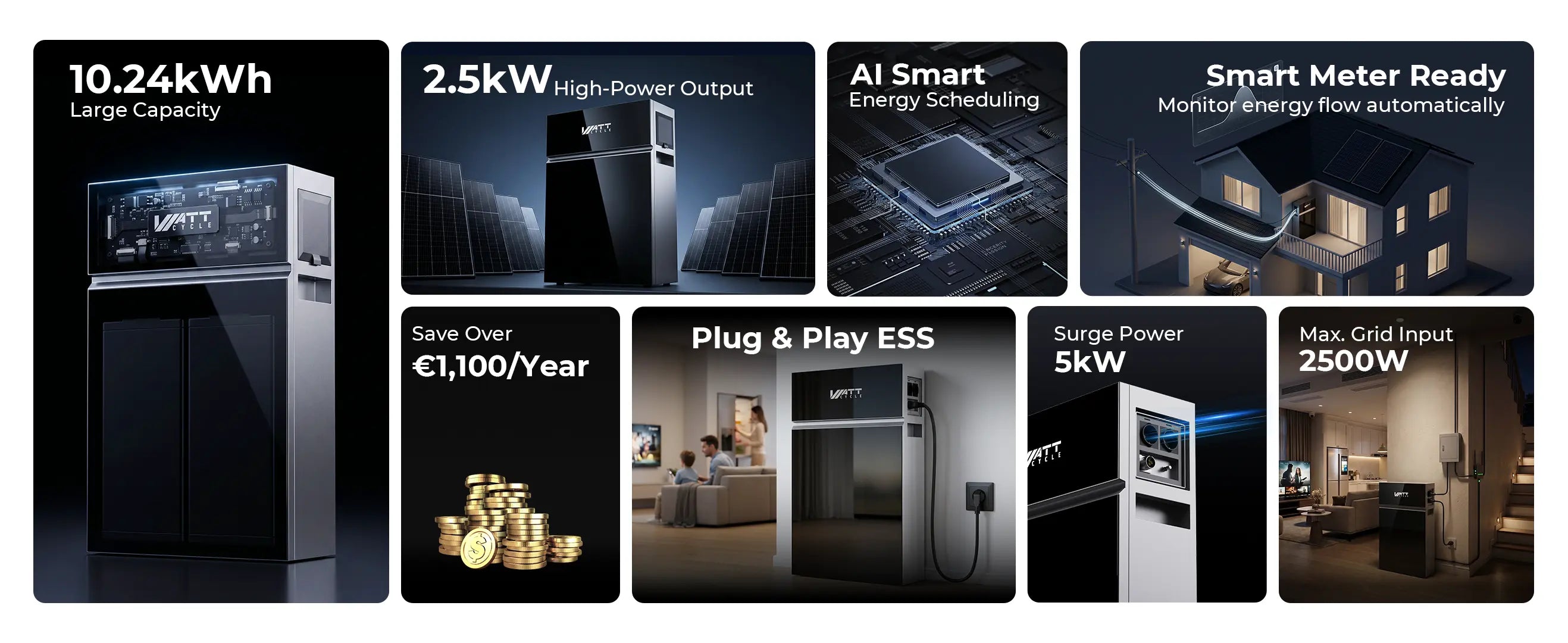
Córas Stórála Ceallraí Uile-i-n-Aon AC Cúpláilte WattCycle 2.5kW do Thithe Eorpacha
Más réiteach breiseán-agus-imirt atá deartha do theaghlaigh Eorpacha atá uait, smaoinigh an gcomhcheanglaíonn an córas suiteáil shimplithe, comhoiriúnacht cúpláilte AC agus bainistíocht chliste fuinnimh.
An Córas Stórála Ceallraí Uile-i-n-Aon AC Cúpláilte WattCycle 2.5kW Tá sé deartha le haghaidh feidhmeanna stórála fuinnimh chónaithe Eorpacha. A bhuíochas dá ailtireacht AC-chúpláilte, is féidir leis oibriú le córais gréine PV agus micrea-inbhéirteoirí atá ann cheana féin atá comhoiriúnach gan an t-inbhéirteoir gréine bunaidh a athsholáthar.
Leis an méadar leictreachais atá san áireamh suiteáilte ag leictreoir cáilithe, is féidir leis an gcóras sreabhadh leictreachais tí a mhonatóiriú agus muirearú agus díluchtú a bhainistiú de réir an mhodha oibriúcháin roghnaithe. Laghdaíonn a dhearadh comhtháite líon na gcomhpháirteanna agus na naisc ar leithligh a bhíonn ag teastáil de ghnáth i suiteálacha ceallraí traidisiúnta cónaithe.
Cén fáth a n-oireann sé don choincheap Breiseán-agus-Súgartha
- Oibriú simplithe le méadar leictreachais san áireamh – Nuair a bheidh an méadar leictreachais suiteáilte ag leictreoir cáilithe agus an córas cumraithe i gceart, is féidir leis an gceallraí úsáid leictreachais tí a mhonatóiriú agus fuinneamh a bhainistiú go huathoibríoch.
- Ailtireacht chórais cúpláilte AC – Ceanglaíonn an córas ar thaobh AC an chórais fuinnimh tí, rud a fhágann go bhfuil sé oiriúnach chun stóráil a chur le suiteálacha gréine atá ann cheana féin atá comhoiriúnach.
- Comhéadan micrea-inbhéartóra comhoiriúnach – Tacaíonn an nasc micrea-inbhéirtéara tiomnaithe le comhtháthú le córais ghréine cónaithe comhoiriúnacha.
- Dearadh comhtháite uile-i-gceann – Comhcheanglaíonn an córas an t-inbhéirtóir, an Córas Bainistíochta Ceallraí, modúil ceallraí LiFePO4, an modúl cumarsáide, an comhéadan eangaí, an comhéadan ualaigh agus an comhéadan micrea-inbhéirtéara in aon réiteach stórála fuinnimh amháin.
- Modhanna oibriúcháin solúbtha – Ligeann modhanna Tosaíocht PV agus Tosaíocht Eangaí d’úsáideoirí muirearú agus díluchtú a oiriúnú do ghiniúint gréine, d’éileamh teaghlaigh agus do choinníollacha taraife leictreachais.
- Bainistíocht fuinnimh tí cliste – Ligeann sonraí méadair leictreachais don chóras sreabhadh fuinnimh a choigeartú de réir thomhaltas an teaghlaigh agus na socruithe rialaithe roghnaithe.
- Cumhacht chúltaca le haghaidh ualaí ceangailte – Le linn briseadh líonra, is féidir leis an gcóras ualaí nasctha comhoiriúnacha a sholáthar ó fhuinneamh ceallraí stóráilte, faoi réir chumraíocht an chórais agus teorainneacha aschuir.
Más mian leat an córas a iniúchadh níos mine, lena n-áirítear a ailtireacht AC-cúpláilte, a shuiteáil, a phríomhghnéithe agus a fheidhmchláir tí, léigh ár dtreoir: Réamhrá Táirge: Córas Stórála Ceallraí Cúpláilte AC Uile-i-n-Aon WattCycle 2.5kW.
Ceisteanna Coitianta
An féidir gach ceallraí tí a phlugáil isteach i soicéad balla caighdeánach?
Ní hea. De ghnáth bíonn suiteáil ghairmiúil agus comhtháthú díreach leis an gcóras leictreach tí ag teastáil i gcás córais cadhnraí traidisiúnta sa bhaile. Tá táirgí a dtugtar breiseán-agus-imirt orthu deartha chun suiteáil a shimpliú, ach ní mór iad a nascadh fós de réir threoracha an mhonaróra agus rialacháin leictreacha áitiúla.
An bhfuil ceallraí tí breiseán-agus-imirt oiriúnach do chóras gréine atá ann cheana féin?
Is féidir. Is minic a bhíonn cadhnraí tí AC-cúpláilte oiriúnach do thionscadail athchóirithe toisc gur féidir leo oibriú taobh le hinbhéirtéir gréine nó micrea-inbhéirtéir atá ann cheana féin atá comhoiriúnach. Mar sin féin, ba cheart comhoiriúnacht a sheiceáil i gcónaí sula gceannaítear iad.
An féidir le ceallraí cúpláilte AC oibriú gan painéil ghréine?
Is féidir le roinnt cadhnraí AC-cúpláilte muirearú ón eangach leictreachais agus oibriú gan chóras gréine. Is féidir leis seo a bheith úsáideach do theaghlaigh a bhfuil taraifí leictreachais ama úsáide nó dinimiciúla acu toisc go bhféadfadh an ceallraí muirearú le linn tréimhsí níos ísle agus leictreachas a sholáthar níos déanaí. Braitheann na feidhmeanna atá ar fáil ar mhúnla na ceallraí agus ar rialacháin leictreachais áitiúla.
An bhfuil leictreoir ag teastáil uaim?
I gcás Córas Stórála Ceallraí AC Cúpláilte Uile-i-n-Aon WattCycle 2.5kW, ba chóir d’leictreoir cáilithe an méadar leictreachais atá san áireamh a shuiteáil. Nuair a bheidh an méadar agus an córas suiteáilte agus cumraithe i gceart, is féidir muirearú agus díluchtú laethúil a bhainistiú go huathoibríoch.
An fiú ceallraí breiseán-agus-imirt sa bhaile é?
Braitheann sé ar do ghiniúint gréine, ar thomhaltas leictreachais, ar struchtúr taraife agus ar an gcaoi a n-úsáidtear an ceallraí. Ní laghdaíonn ceallraí billí leictreachais go huathoibríoch toisc go stórálann sí fuinneamh.
Tagann coigilteas féideartha ó leictreachas gréine stóráilte a úsáid in ionad leictreachas a cheannach ón eangach, nó ó mhuirearú le leictreachas eangach ar chostas níos ísle agus é a urscaoileadh le linn tréimhsí níos costasaí. Dá bhrí sin, braitheann an luach airgeadais ar an difríocht idir costais mhuirearaithe agus tomhaltais, chomh maith le héifeachtúlacht an chórais agus patrúin úsáide teaghlaigh.
Conclúid
Cuireann ceallraí tí breiseán-agus-imirt rogha phraiticiúil ar fáil seachas stóráil fuinnimh chónaithe traidisiúnta do theaghlaigh a bhfuil luach acu ar shuiteáil níos simplí, solúbthacht agus úsáid fuinnimh níos éifeachtaí. Is féidir le córas AC-cúpláilte a bheith thar a bheith úsáideach agus stóráil á cur le suiteáil gréine atá ann cheana féin mar d’fhéadfadh sé nach mbeadh gá an t-inverter gréine bunaidh a athsholáthar.
Is fachtóir tábhachtach eile é an costas agus córais éagsúla á gcomparáid. Más mian leat tuiscint a fháil ar phraghsanna reatha na gceallraí, na fachtóirí a mbíonn tionchar acu ar an infheistíocht fhoriomlán agus cad is fiúntas maith ann, léigh ár dtreoir. Cé mhéad a chosnaíonn ceallraí baile?.
Sula ndéanann tú ceannach, féach níos faide ná cumas na ceallraí amháin.Smaoinigh ar riachtanais suiteála, comhoiriúnacht cúpláilte AC, cumhacht aschuir, teicneolaíocht ceallraí, comhtháthú méadair leictreachais agus bainistíocht chliste fuinnimh.
Is féidir le córas breiseán-agus-imirt dea-dheartha cabhrú leat níos mó de do leictreachas gréine féin a úsáid agus tomhaltas an ghreille a aistriú go hamanna níos oiriúnaí agus an oibriú laethúil a choinneáil simplí ag an am céanna.


Comments
No comments yet. Be the first to share your thoughts.
Leave a Comment