


At vælge det rigtige batteri til en elektrisk påhængsmotor handler ikke kun om at vælge det højeste Ah-tal. Batteriet skal passe til din motorspænding, understøtte tilstrækkelig kontinuerlig strøm, give den nødvendige driftstid og forblive pålideligt under våde forhold til vandet.
Til små fiskerbåde, kajakker, oppustelige både og lette elektriske bådmotoropsætninger er et LiFePO4 marinebatteri ofte en praktisk opgradering fra blysyre. Det er lettere, tilbyder mere brugbar energi og holder normalt meget længere. For større elektriske påhængsmotorer bør brugerne være ekstra opmærksomme på spænding, BMS-klassificering, peakstrøm og samlet energikapacitet.
Vigtige konklusioner
- Spænding: Match først motorspændingen: 12V, 24V, 36V eller 48V.
- Køretid: Brug Wh, ikke kun Ah, til at estimere, hvor længe motoren kan køre.
- BMS-strøm: BMS'ens kontinuerlige afladningskapacitet skal være højere end motorens strømforbrug.
- Maritim beskyttelse: Vælg et batteri med korrekt vandtæt beskyttelse og sikker installation.
Hvad er et batteri til en elektrisk påhængsmotor?
Et batteri til en elektrisk påhængsmotor er et deep cycle-batteri, der bruges til at drive en elektrisk bådmotor eller en elektrisk påhængsmotor. I modsætning til en benzinpåhængsmotor, som primært har brug for et startbatteri, er en elektrisk påhængsmotor afhængig af batteriet for kontinuerlig fremdrift.
Det betyder, at batteriet skal matche motorspændingen, understøtte kontinuerlig strømforbrug og levere tilstrækkelig brugbar energi til din forventede driftstid. I mange tilfælde af brug i små både og fiskeri foretrækkes et LiFePO4 marinebatteri, fordi det er lettere, mere stabilt under belastning og tilbyder mere brugbar kapacitet end traditionelle blybatterier.
Elektrisk påhængsmotorbatteri vs. bådbatteri
Begrebet bådbatteri er bredt. Det kan henvise til et startbatteri, et deep cycle marinebatteri, et trollingmotorbatteri eller et batteri til en elektrisk påhængsmotor. Hvis dit mål er at drive en elektrisk bådmotor, skal du fokusere på deep cycle-ydeevne, ikke kun generel maritim brug.
| Batteritype | Primær anvendelse | Egnet til elektrisk fremdrift? |
|---|---|---|
| Startbatteri | Starter benzin påhængsmotorer | Nej. Den er ikke designet til langvarig kontinuerlig afladning. |
| Dybcyklus marinebatteri | Styrer langvarige belastninger | Nogle gange, hvis spænding og strøm matcher motoren. |
| Trollingmotorbatteri | Kører lavhastigheds elektriske motorer til fiskeri og positionering | Ja, især til små 12V eller 24V bådmotorer. |
| Elektrisk påhængsmotorbatteri | Driver elektrisk bådfremdrift | Ja, hvis det matcher spændings-, strøm- og driftstidsbehovene. |
En almindelig fejl ved køb er at undgå et batteri, blot fordi det er mærket som et trollingmotorbatteri. I virkeligheden kan mange trollingmotorbatterier også fungere til brug i lette elektriske bådmotorer, så længe spændingen og den kontinuerlige BMS-afladningsstrøm matcher din motor. Mærket betyder mindre end de faktiske elektriske specifikationer.
Nøglefaktorer ved valg af batteri til en elektrisk påhængsmotor
Før du bruger penge, så tjek din motormanual. For at undgå at købe et batteri, der går i stå på vandet eller ikke passer til din båd, skal du have styr på disse fem vigtige specifikationer:
| Faktor | Hvorfor det er vigtigt | Hvad skal man kigge efter |
|---|---|---|
| Spænding | Batteriet skal passe præcist til motoren. | 12V, 24V, 36V eller 48V krav. |
| BMS-strøm | Afgør om batteriet kan klare fuld gas. | Den kontinuerlige afladningskapacitet skal overstige motorens maksimale forbrug. |
| Kapacitet (Wh) | Bestemmer din tid på vandet. | Se på Wh (watt-timer) for at få en præcis estimering af driftstiden, ikke kun Ah. |
| Kemi | Påvirker vægt, levetid og brugbar energi. | LiFePO4 er den moderne marinestandard frem for tung blysyre. |
| Marineklassificering | Beskytter mod våde dæk og saltsprøjt. | IP67 vandtæthedsklassificering og vibrationsmodstand. |
⚡ Bådførerens hurtige matematik-snydeark
Vil du vide præcis hvilken størrelse du har brug for? Brug disse to enkle formler, inden du går til kassen:
- Beregn peakstrøm (ampere): Motoreffekt (watt) ÷ Batterispænding (V) (e.g. , En 480W motor på et 12V batteri bruger 40A. Dit BMS skal understøtte >40A).
- Estimeret køretid (timer): Batterienergi (Wh) ÷ Gennemsnitlig motoreffekt (Watt) (e.g. , Et 1280 Wh batteri, der kører med en motor på 400 W, holder cirka 3,2 timer).
Når disse tal er klare, kan du med sikkerhed beslutte, hvilken spænding og størrelse der passer til dit dæk.
Hvilken størrelse og spænding på batteriet skal du bruge til din elektriske bådmotor?
Der findes ikke én batteristørrelse, der passer bedst til alle elektriske bådmotorer. Det rigtige valg afhænger af motorspænding, motoreffekt, forventet driftstid, bådstørrelse og brugsstil.
Dimensionering af kapaciteten: Hvor mange Ah eller Wh har du brug for?
Kapaciteten vises normalt i Ah, men Hv er mere nyttigt, når man skal estimere driftstid. Ah alene kan være misvisende, fordi 100 Ah ved 12 V ikke er det samme som 100 Ah ved 24 V eller 48 V.
Brug Wh til at sammenligne batterienergi:
- 12V 100Ah batteri: omkring 1280 Wh
- 24V 100Ah batteri: omkring 2560 Wh
- 36V 100Ah batterisystem: omkring 3840 Wh
- 48V 100Ah batteri: omkring 5120 Wh
For driftstid skal du dividere batteriets energi med din motors gennemsnitlige strømforbrug.
| Eksempel på brugsscenarie | Gennemsnitlig motoreffekt | Målkørselstid | Foreslået brugbar energi |
|---|---|---|---|
| Kort manøvrering | 300W | 2 timer | Omkring 600 Wh |
| Brug for let fiskeri | 400W | 4 timer | Omkring 1600 Wh |
| Længere fiskesession | 500W | 5 timer | Omkring 2500 Wh |
| Stærkere brug af bådmotor | 1000W | 3 timer | Omkring 3000 Wh |
| Højere effekt elektrisk påhængsmotor | 2000W | 2 timer | Omkring 4000 Wh |
Dette er kun estimater. Hvis du normalt kører motoren ved fuld effekt, skal du vælge en højere kapacitet. Hvis du primært bruger lav hastighed, kan det samme batteri holde længere.
12V LiFePO4-batteri: Til små trollingmotorer og brug i lette både
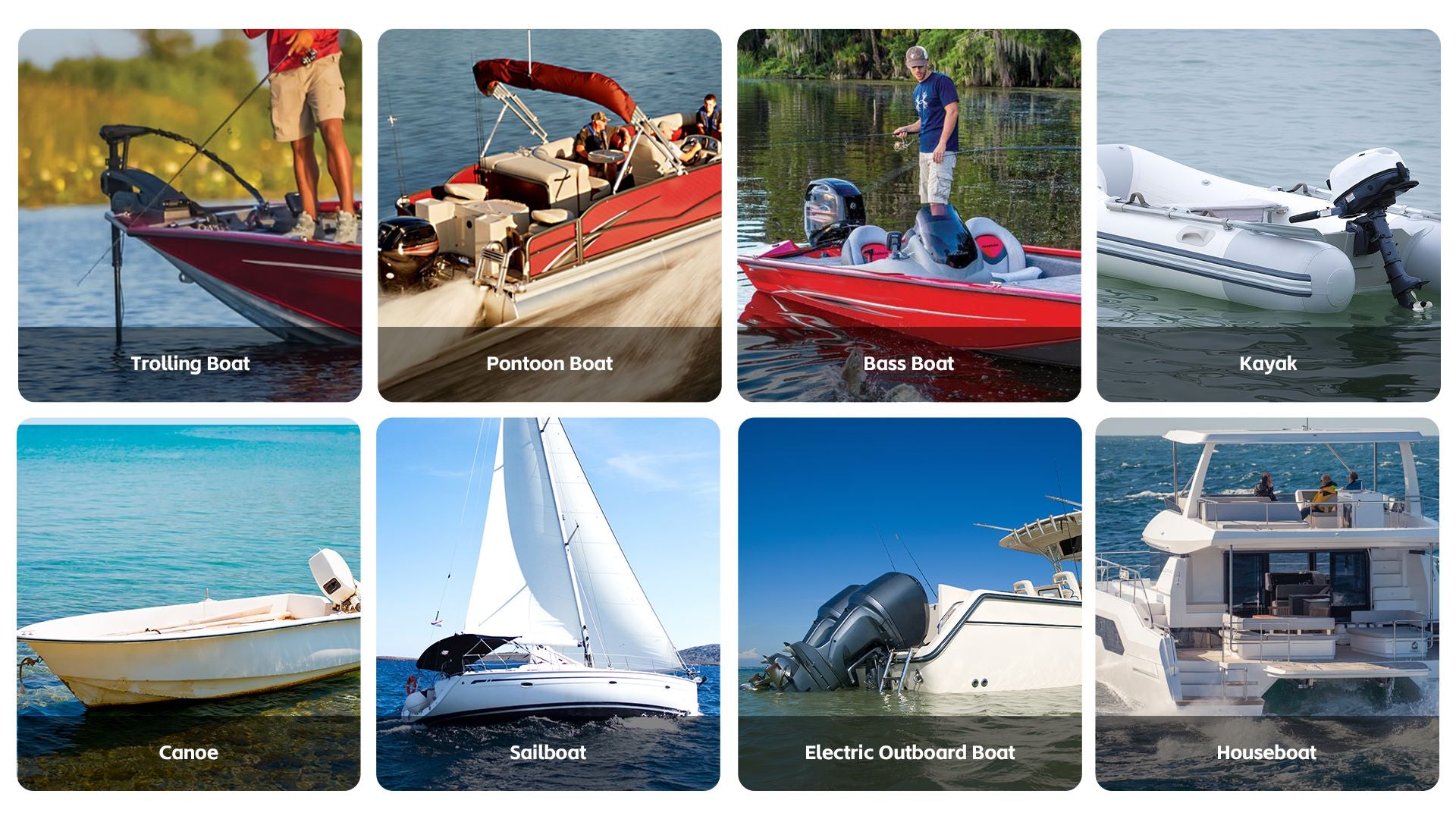
Et 12V-system er det foretrukne valg til kajakker, oppustelige både og små fiskerbåde, hvor bærbarhed og letvægtsdesign er vigtigst.
Topvalg til 12V-opsætninger: De WattCycle 12V 100Ah Deep Cycle Trolling Motor Batteri er specielt konstrueret til disse miljøer.
- Pålidelig driftstid: Med 1280 Wh brugbar energi understøtter den nemt over 4 timers sejlads på en 300 W motor.
- Robust BMS: Udstyret med et 120A kontinuerligt BMS og en imponerende 400A ± 50A (1,2s) Peak-afladningsstrøm, perfekt skræddersyet til at håndtere den høje startstød fra elmotorer.
- Marinekvalitet: Det vandtætte IP67-design sikrer, at den kan håndtere våde dæk, stænk og pludselige vejrforhold.
Det er den ultimative, enkle opgradering med et enkelt batteri til weekendfiskere, der ønsker at droppe tunge blybatterier.
24V LiFePO4-batteri: Det optimale valg for både trækkraft og rækkevidde
Når en 12V-opsætning ikke er nok (som til en 36 kg motor eller en mellemstor påhængsmotor), er 24V dit næste skridt. Selvom du kan tilslutte to 12V-batterier i serie, er det meget smartere at købe et enkelt 24V-batteri - det eliminerer komplicerede ledninger, risiko for celleubalance og rod på dækket.
Topvalg til 24V-opsætninger: For en ren plug-and-play-løsning, WattCycle 24V 100Ah LiFePO4 Batteri leverer uovertruffen pålidelighed:
- Massiv energi (2560 Wh): Giver over 5 timers kontinuerlig driftstid for en 500W elektrisk påhængsmotor.
- Fejlfri BMS (100A): Håndterer sikkert kontinuerlig afladning op til 2560 W med sin 100 A BMS, samtidig med at den leverer en 300A ± 50A (1,2s) Peak-afladningsstrøm. Selv ved fuld gas (ved 40A til 60A) vil BMS'en ikke udløse og efterlade dig strandet.
- Kompakt & Lys: Med en vægt på lige under 20 kg pakker den dobbelt så meget spænding i et enkelt kabinet, hvilket sparer værdifuld gulvplads.
36V og 48V systemer: Hvorfor serieforbindelse er det smarte valg
Til elektriske påhængsmotorer med høj effekt kan man antage, at et enkelt 36V- eller 48V-batteri er bedst. Imidlertid er massive 48V-batterier typisk designet til solcelleanlæg i hjemmet – de er ekstremt tunge og svære at balancere på en båd.
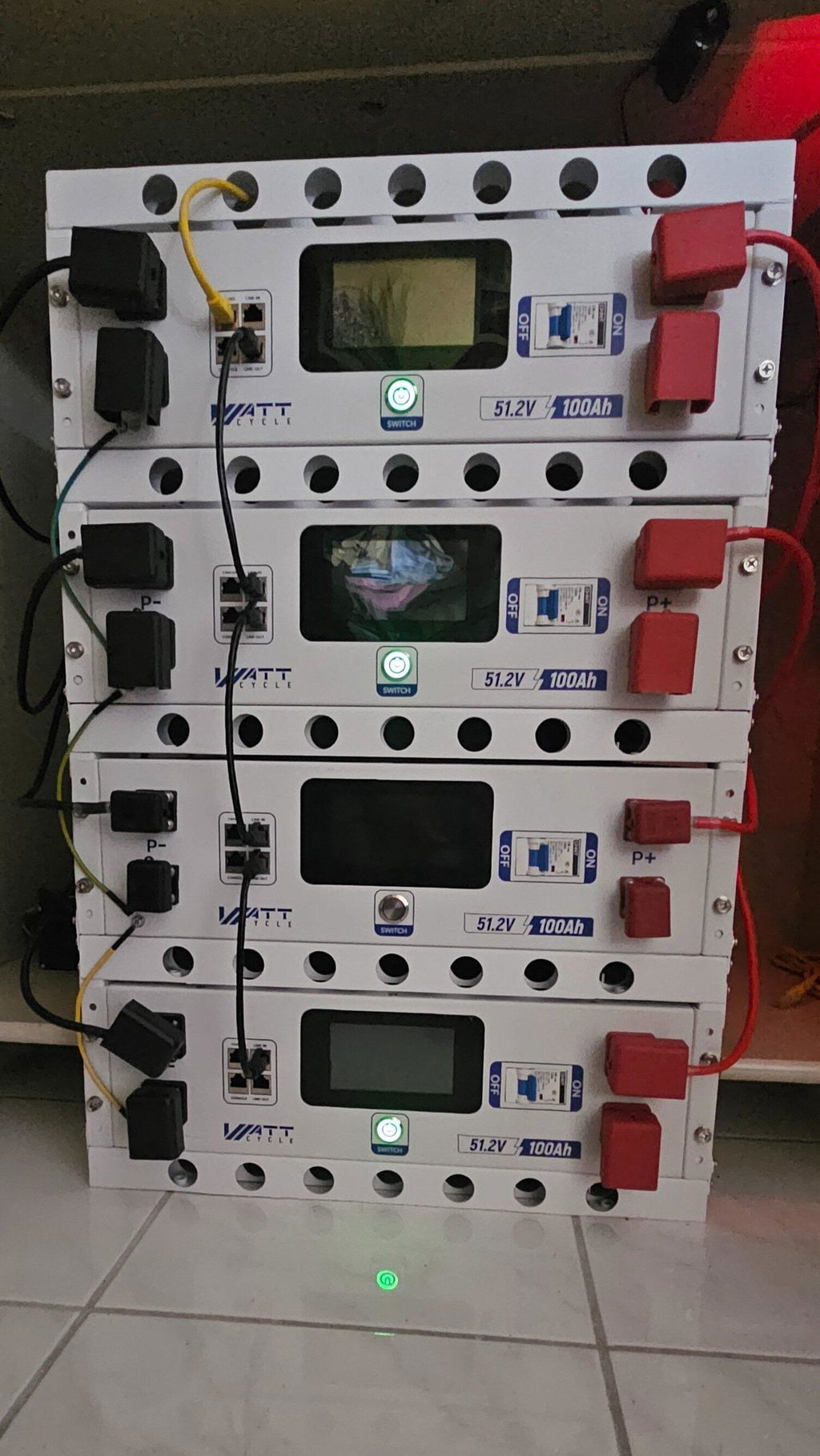
Til maritim brug er det en smartere strategi at serieforbinde flere 12V-batterier med høj kapacitet (tre til 36V, fire til 48V). Det fordeler vægten jævnt og gør installationen til et job for én person.
Hurtig sammenligning: Serie- vs. enkeltbatteri
- Flere 12V i serie: Fleksibel vægtfordeling og meget nemmere at bære én efter én, selvom det involverer mere ledningsføring og kræver, at batterierne er perfekt afbalancerede.
- Enkelt 36V eller 48V batteri: En renere plug-and-play-opsætning med mindre ledningsføring, men disse enheder kan være utroligt tunge at løfte og kræver en dedikeret højspændingsoplader.
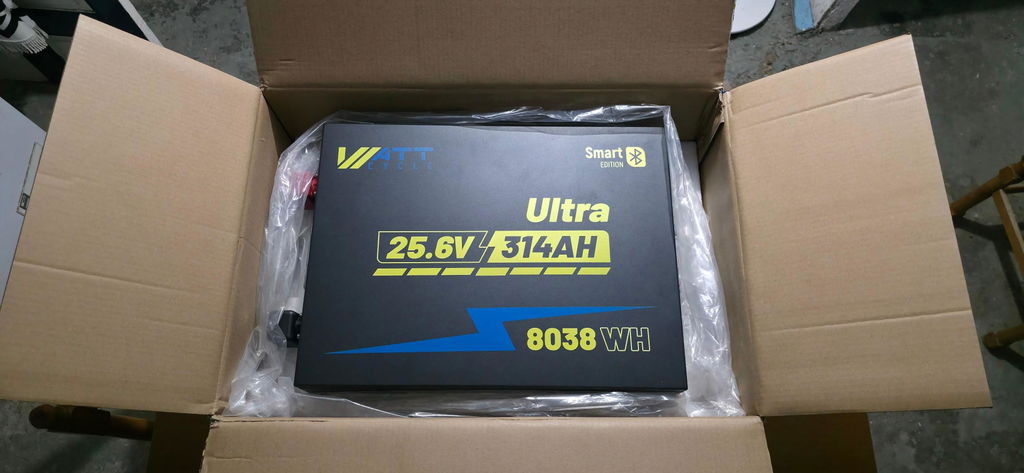
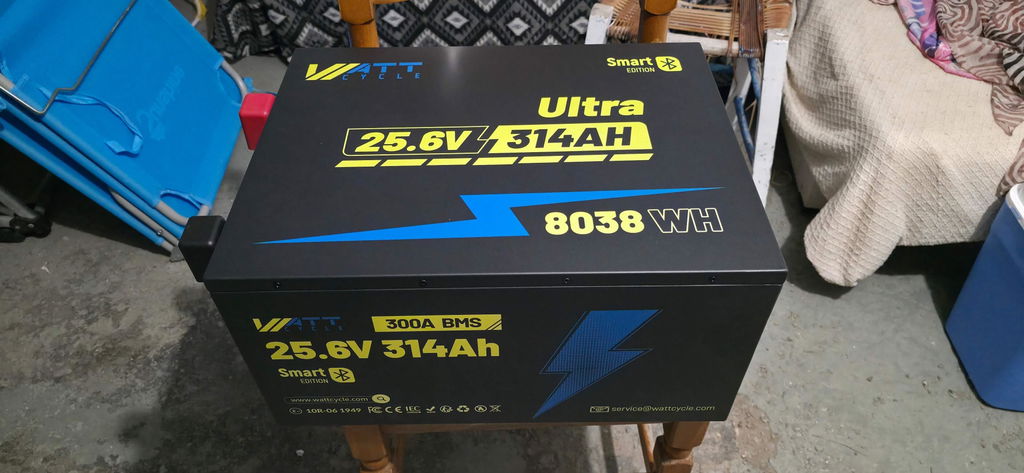
Topvalg til serieopsætninger: De WattCycle 12V 314Ah Mini LiFePO4 Batteri (Bluetooth) & Opvarmet) er perfekt konstrueret til opbygning af højspændings marinesystemer:
- Massiv energi: Tre i serie (36V) giver utrolige 11.300 Wh – nok til at køre en kraftig 2000 W påhængsmotor i over 5 timer.
- Kraftig BMS (200A): Har en kraftig 200A kontinuerlig BMS sammen med en 210A ± 10A (1,2s) spidsstrøm til nemt at håndtere store strømforbrug på tværs af serieforbundne batteribanker.
- Vigtig Bluetooth-overvågning: Tjek hvert batteris opladningsniveau direkte fra din telefon for at forhindre celleubalancer, mens du er på vandet.
- Klar til koldt vejr: Indbygget selvopvarmning opvarmer automatisk batteriet før opladning, hvilket sikrer optimal ydeevne på iskolde morgener.
- Mini-fodaftryk: Pakker 314 Ah i en kompakt kuffert, der nemt passer ind i trange opbevaringsbænke i båden.

⚠️ Pro-tip: Sådan serieforbinder du marinebatterier sikkert
Før du tilslutter dine 12V-batterier for at oprette et 36V- eller 48V-system, skal du oplade hvert batteri helt individuelt til 100%. Dette sikrer, at hele batteribanken starter perfekt afbalanceret. Brug altid batterier af præcis samme mærke, kapacitet og alder for at forhindre systemfejl.
Almindelige fejl ved valg af batteri til påhængsmotorer
Kun at vælge ved Ah
Ah er vigtigt, men det fortæller ikke hele historien. Et 12V 100Ah batteri og et 48V 100Ah batteri har meget forskellige energiniveauer. Brug Wh til at sammenligne batterienergi mere præcist.
Ignorerer motorspænding
Batterispændingen skal stemme overens med motorspændingen. Et 12V-batteri kan ikke direkte drive en 24V-, 36V- eller 48V-motor, medmindre det er en del af et korrekt designet seriesystem.
Ignorerer BMS-strømklassificering
Et batteri kan have tilstrækkelig kapacitet, men stadig ikke være i stand til at understøtte motoren, hvis BMS-strømmen er for lav. Kontroller altid den kontinuerlige afladningsstrøm og peakstrømmen.
For eksempel har en 36V elektrisk påhængsmotor, der trækker 37A ved fuld hastighed, brug for et batterisystem, der sikkert kan levere mere end 37A kontinuerligt. Hvis et billigt batteri har en BMS, der kun er klassificeret til 30A kontinuerlig afladning, kan det lukke ned midt i vandet for at beskytte sig selv. Til denne type motor skal du kigge efter et batterisystem med mindst 40A kontinuerlig afladning og ideelt set mere loftshøjde.
Brug af et startbatteri til fremdrift
Et startbatteri er designet til at levere korte udbrud med høj strøm. Det er ikke det bedste valg til langvarig kontinuerlig afladning. Til elektriske bådmotorer er et dybdecyklusbatteri normalt mere egnet.
Brug af den forkerte oplader
LiFePO4-batterier kræver kompatible opladningsprofiler. Brug af en oplader, der kun er designet til blybatterier, kan forårsage dårlig opladningsydelse eller reducere batteriets levetid.
Undervurdering af den virkelige runtime
Køretiden ændrer sig med bådens vægt, hastighed, vind, vandstrøm og motorens effektivitet. Efterlad altid ekstra kapacitet i stedet for at planlægge omkring den maksimale teoretiske køretid.
Ofte stillede spørgsmål om batterier til elektriske påhængsmotorer
1. Hvilket batteri skal jeg bruge til en elektrisk påhængsmotor?
Du har brug for et batteri, der matcher din motorspænding og understøtter motorens kontinuerlige strømbehov. Til små 12V trollingmotorer kan et 12V LiFePO4-batteri være et praktisk valg. Til større 24V, 36V eller 48V elektriske påhængsmotorer skal du vælge et batterisystem, der matcher motorproducentens spændings- og strømkrav.
2. Er et batteri til en trollingmotor det samme som et batteri til en elektrisk påhængsmotor?
Ikke helt, men de to kategorier kan overlappe hinanden. Et trollingmotorbatteri er normalt designet til elektrisk fremdrift ved lav hastighed, mens et elektrisk påhængsmotorbatteri muligvis skal understøtte højere effekt og længere driftstid. Hvis spændingen matcher din motor, og BMS'ens kontinuerlige afladningsstrøm er højere end din motors strømforbrug, kan det ofte bruges til lette elektriske påhængsmotorapplikationer.
3. Kan jeg bruge et bilbatteri til en elektrisk bådmotor?
Det anbefales ikke. Et bilbatteri er primært designet til at starte en motor, ikke til dyb kontinuerlig afladning. En elektrisk bådmotor har brug for et dybcyklusbatteri, der kan give stabil strøm over tid uden hurtigt at miste levetiden.
4. Hvor længe kan et 12V 100Ah batteri køre en elektrisk påhængsmotor?
Et 12V 100Ah LiFePO4-batteri leverer omkring 1280 Wh energi. Hvis din motor bruger 400 W i gennemsnit, er den estimerede driftstid omkring 3,2 timer. Hvis motoren bruger 800 W, er den estimerede driftstid omkring 1,6 timer. Den reelle driftstid afhænger i høj grad af bådens vægt, hastighed, vind og vandstrøm.
5. Er LiFePO4 bedre end blysyre til bådmotorer?
Ja, til de fleste opsætninger er LiFePO4 et langt bedre valg, fordi det er op til 70 % lettere, tilbyder 100 % brugbar kapacitet (blysyre bør kun aflades til 50 %), oplades hurtigere og holder op til 10 gange længere. Den eneste ulempe er en højere startpris.


Comments
No comments yet. Be the first to share your thoughts.
Leave a Comment