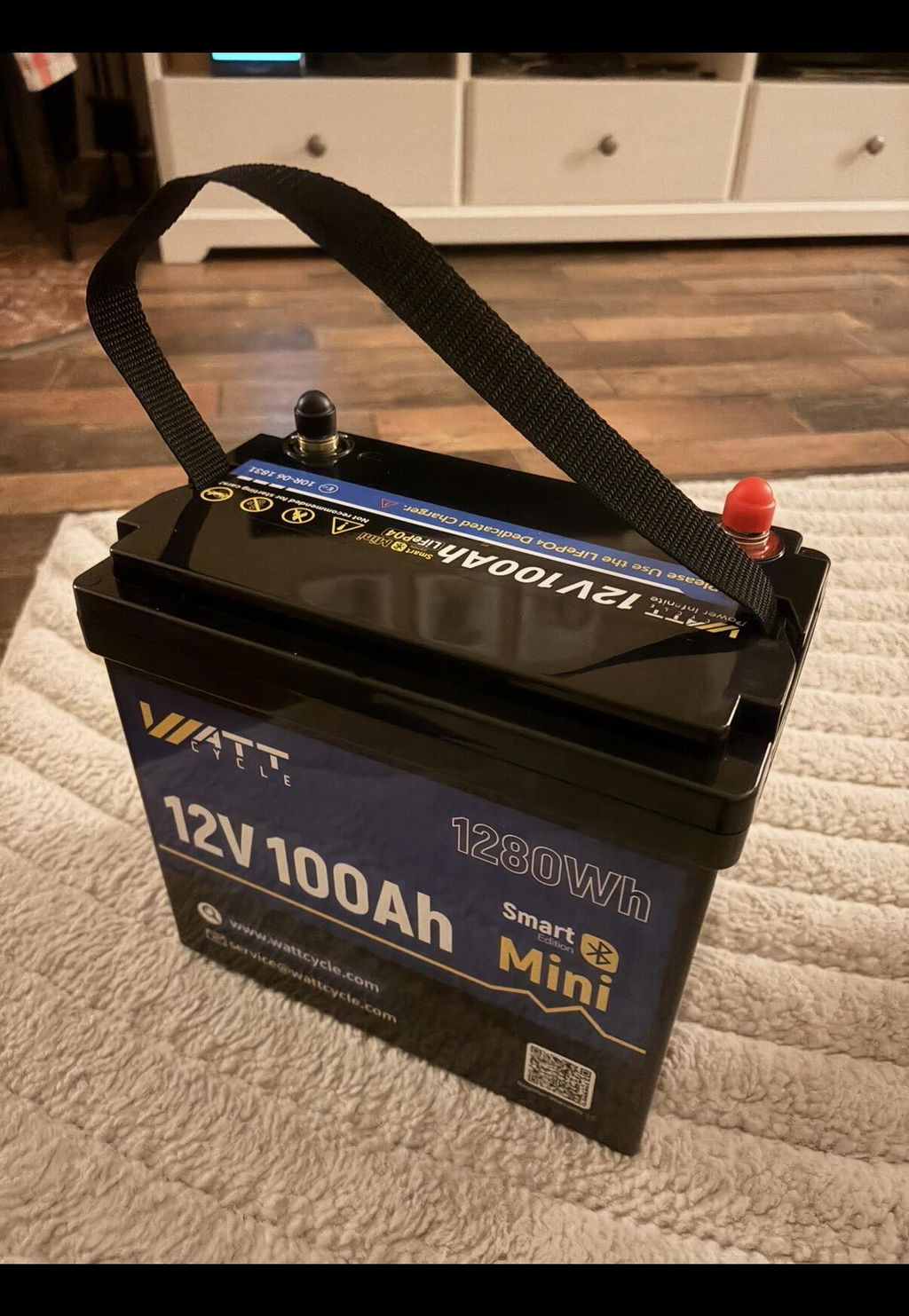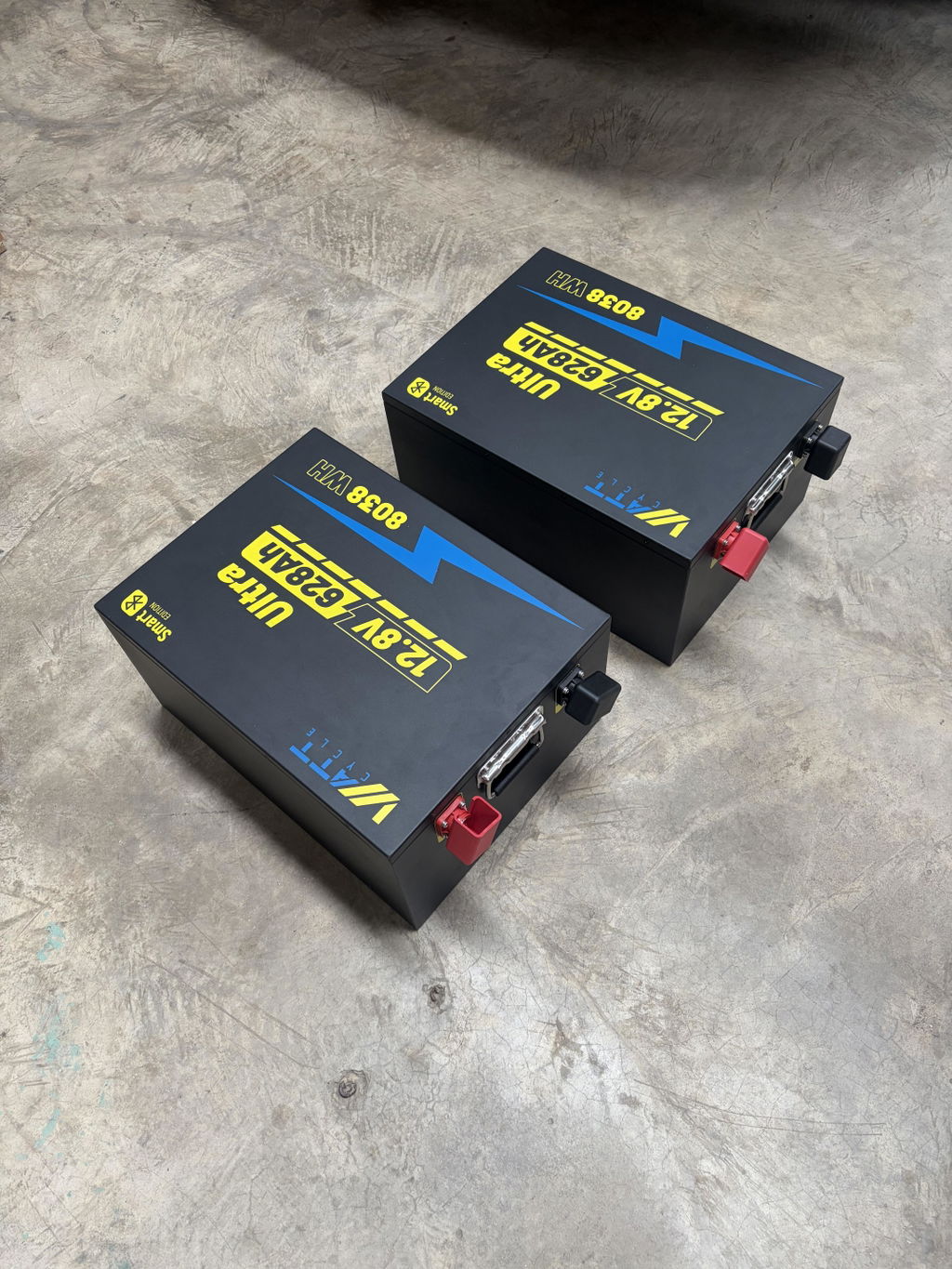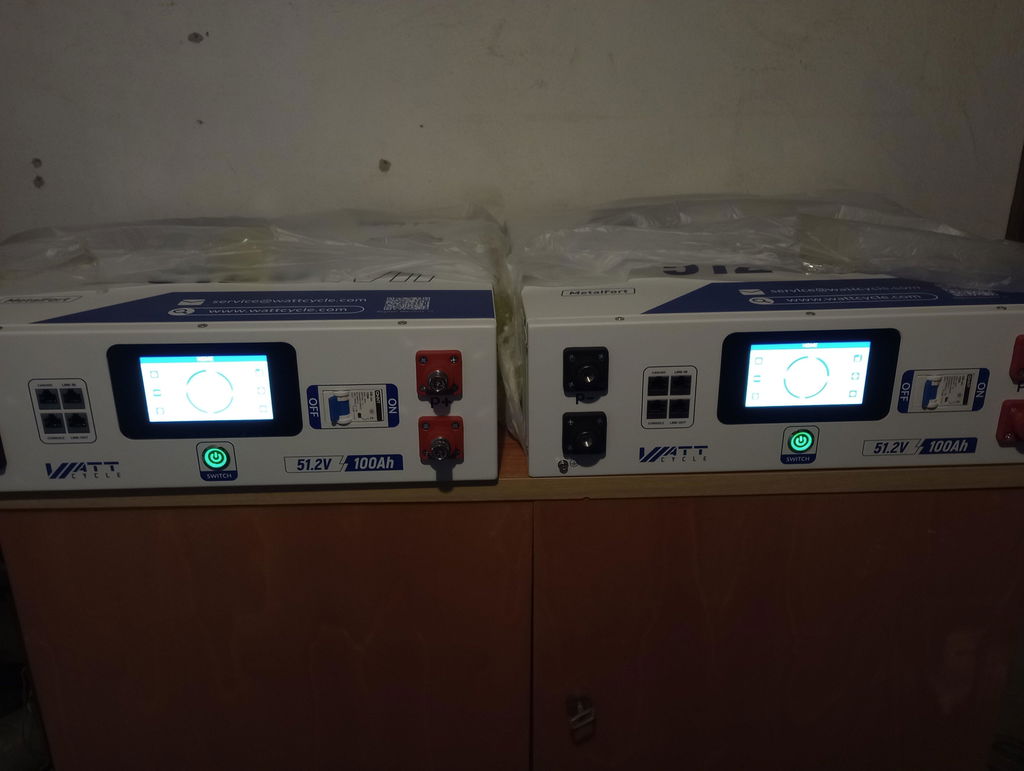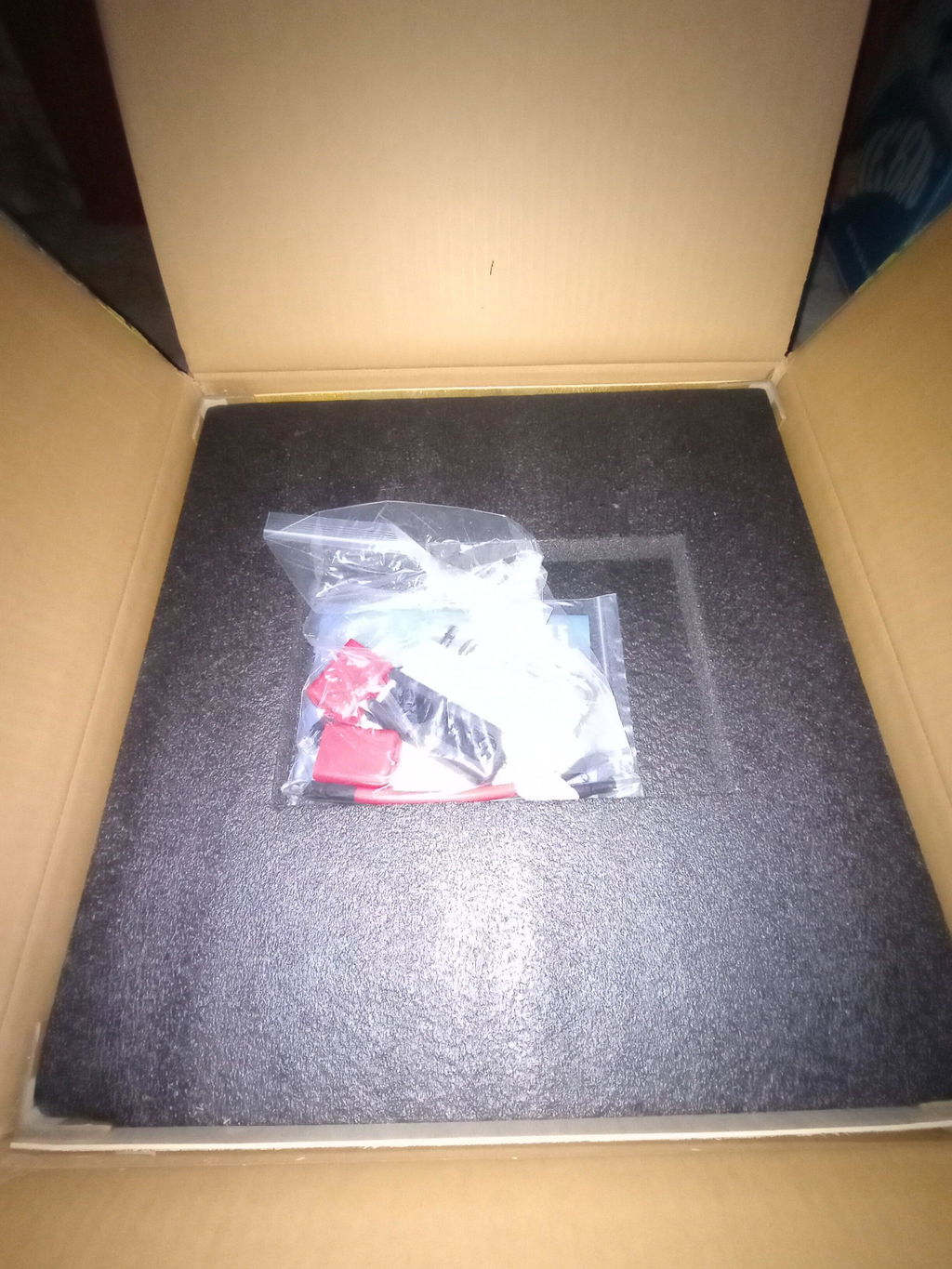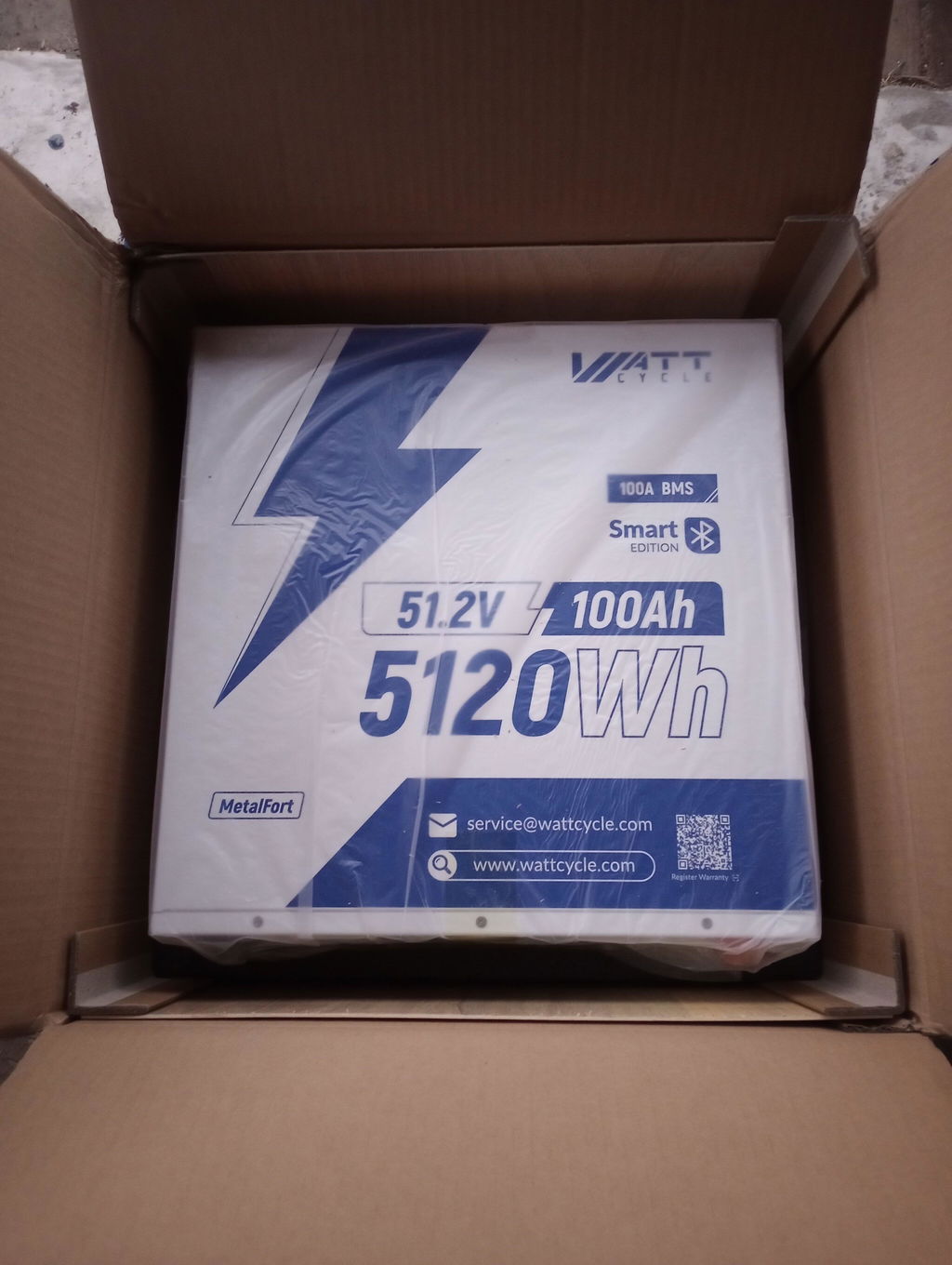
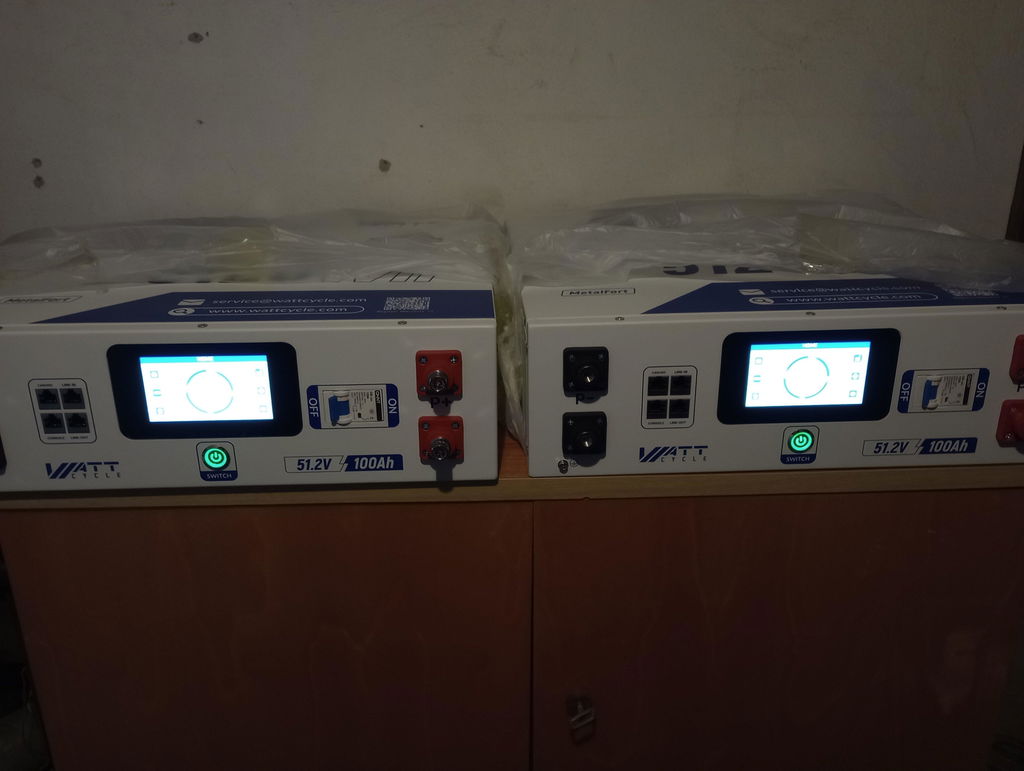
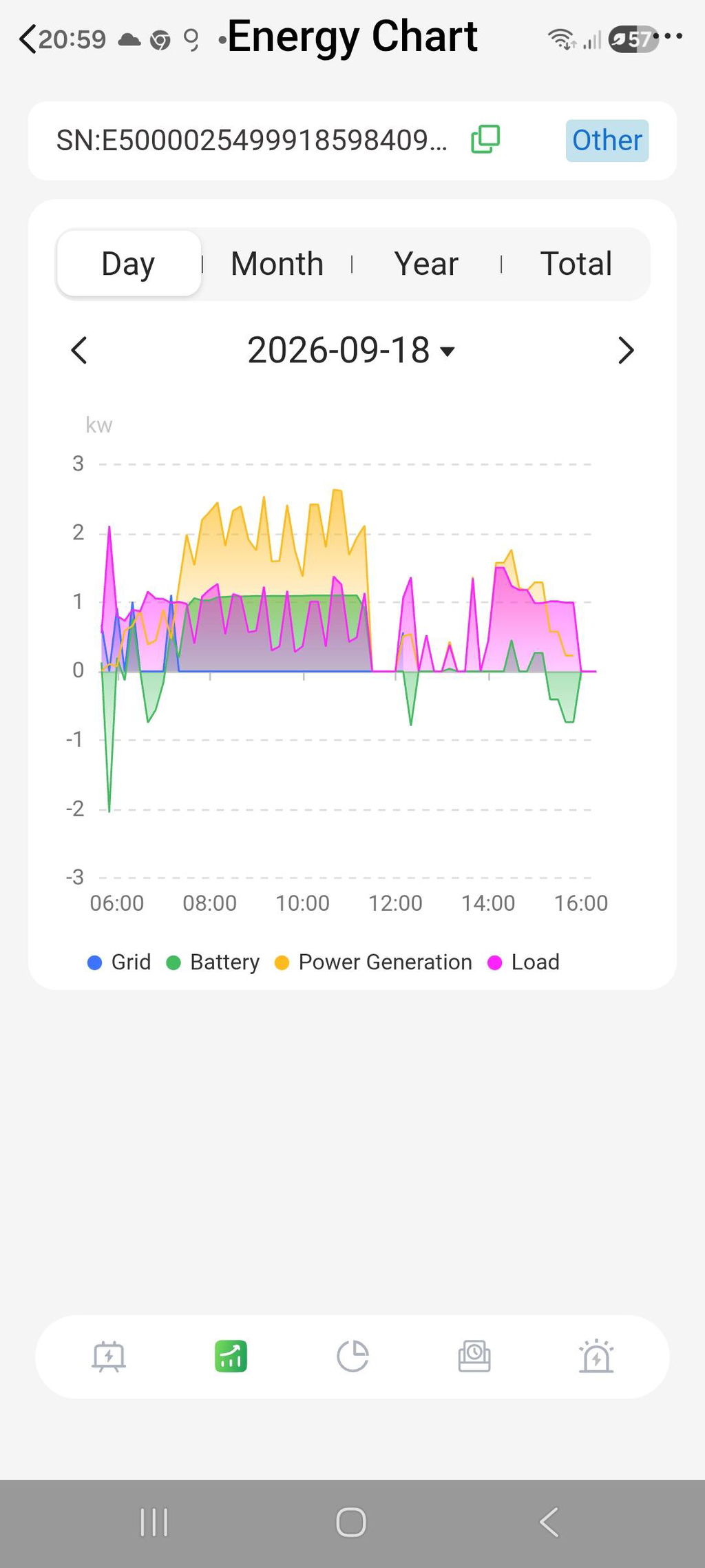
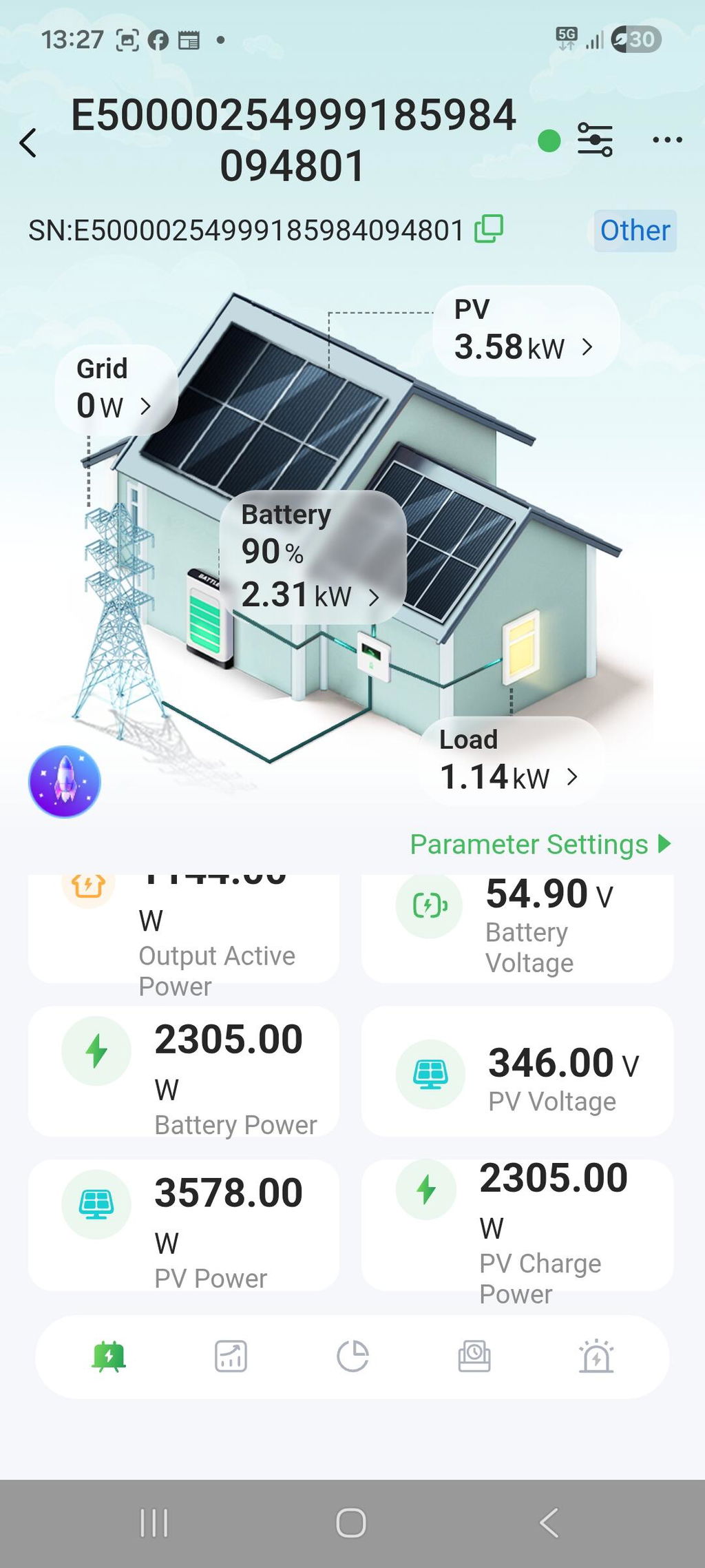
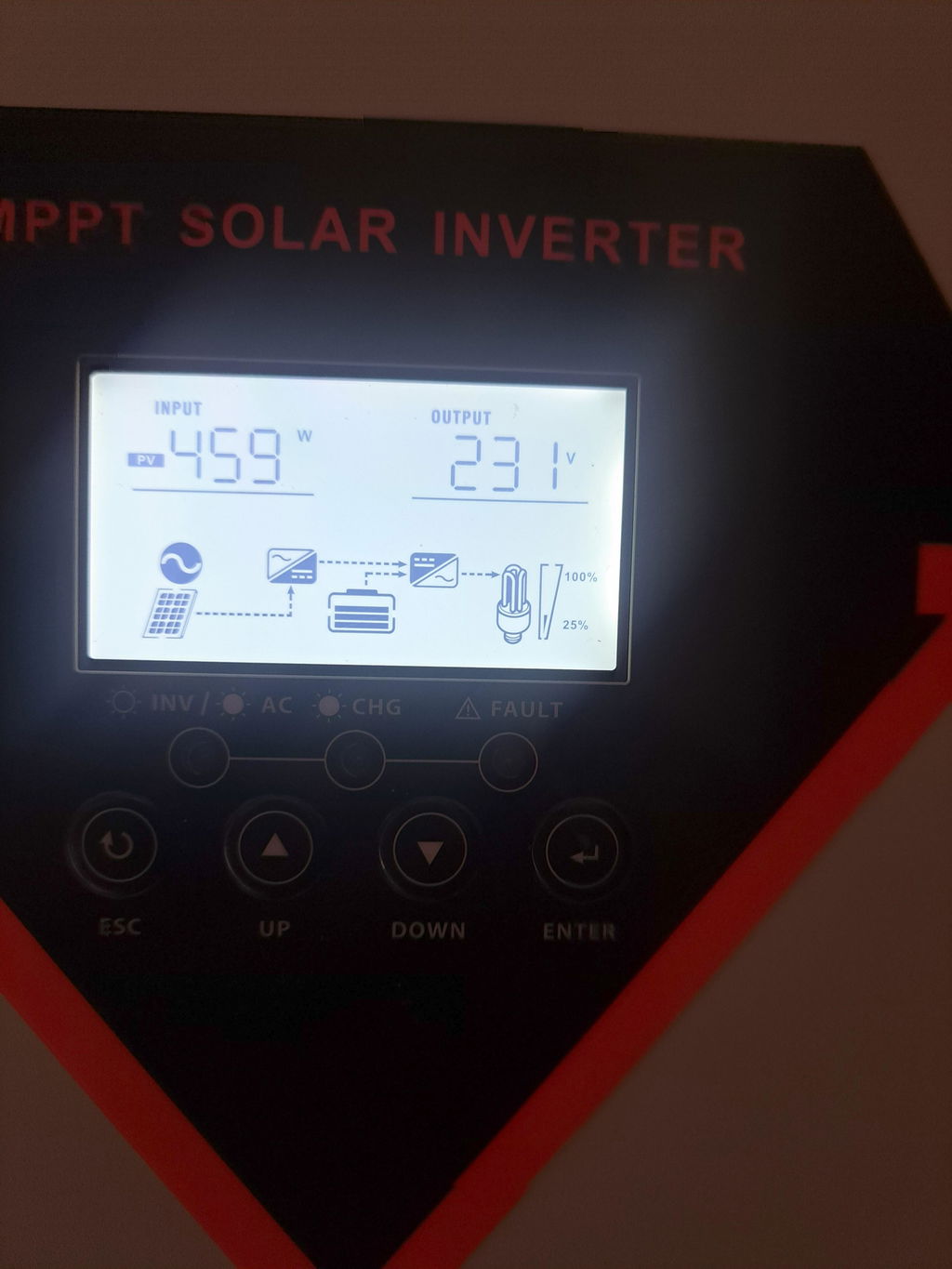
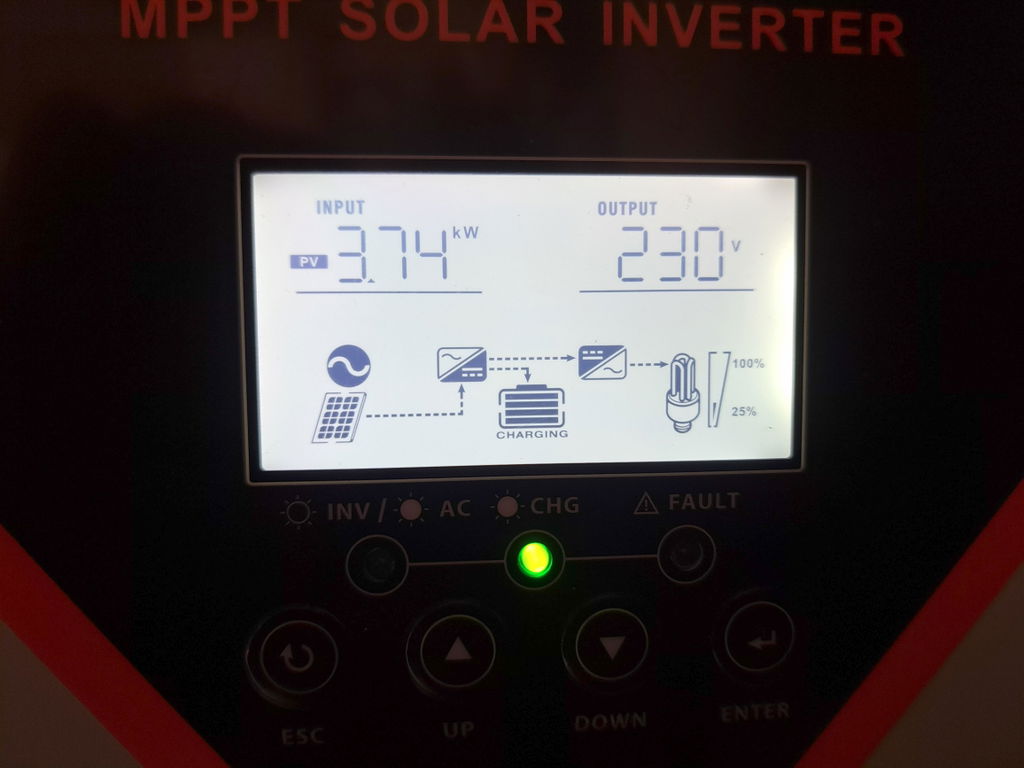
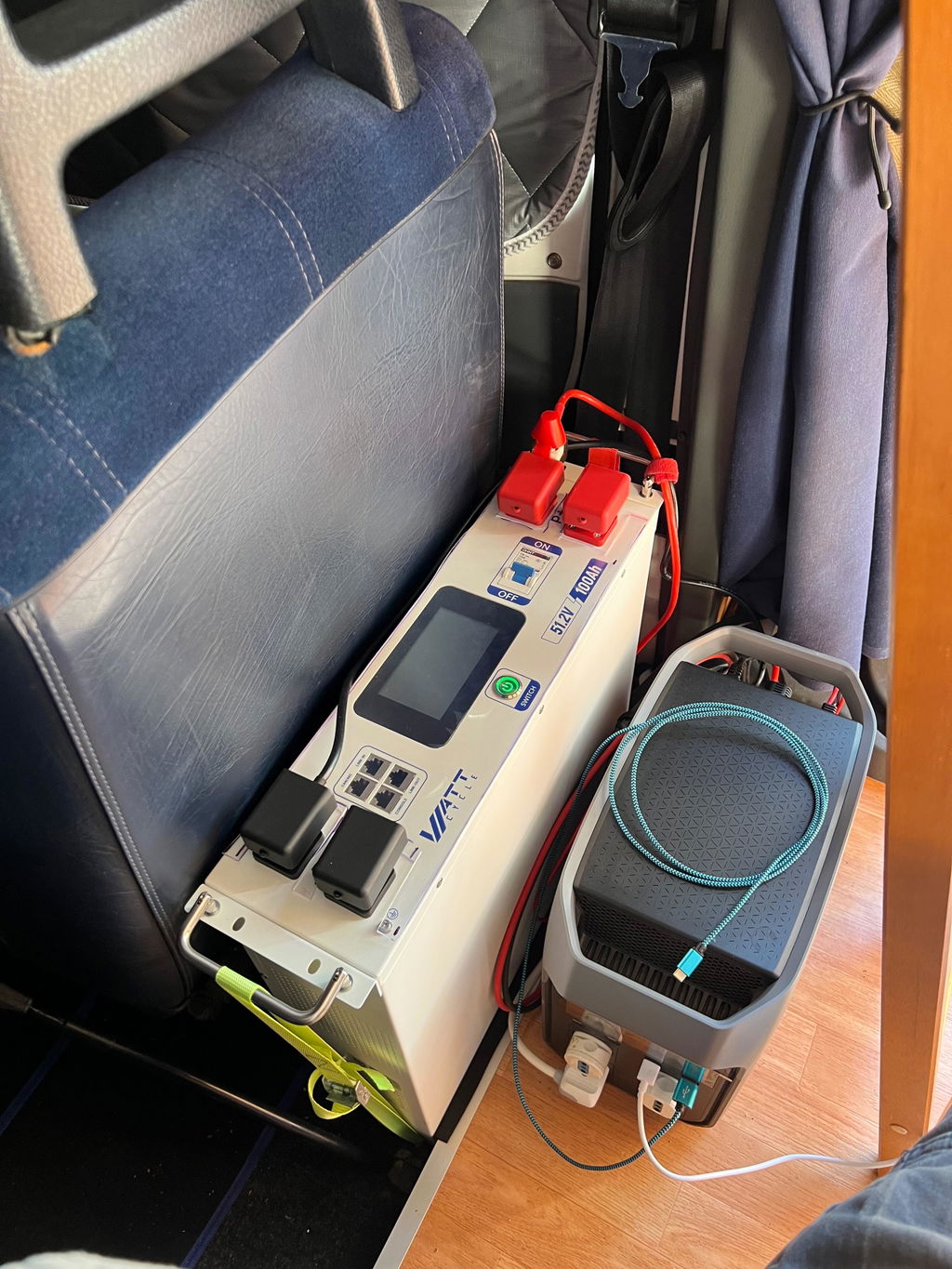
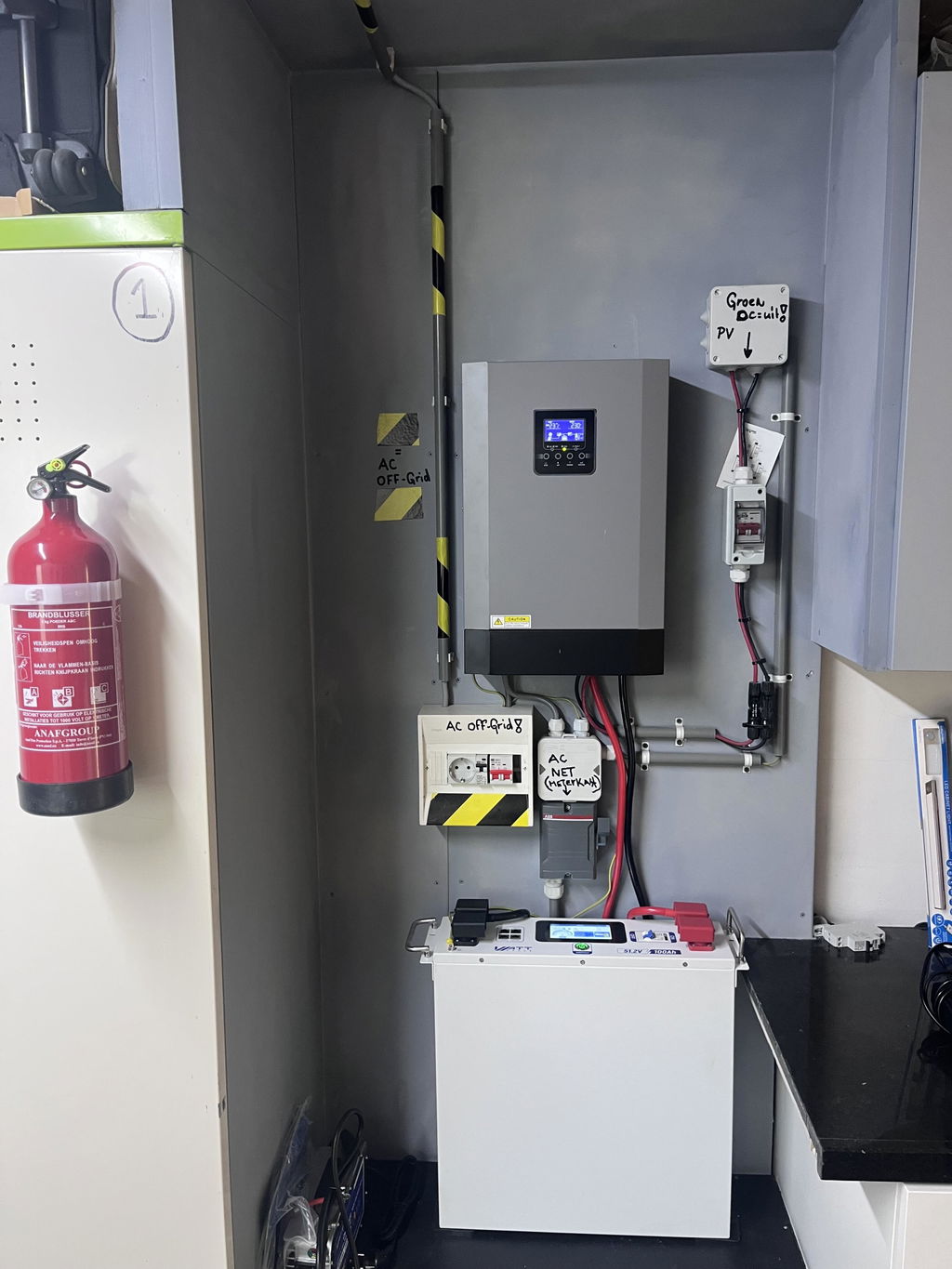
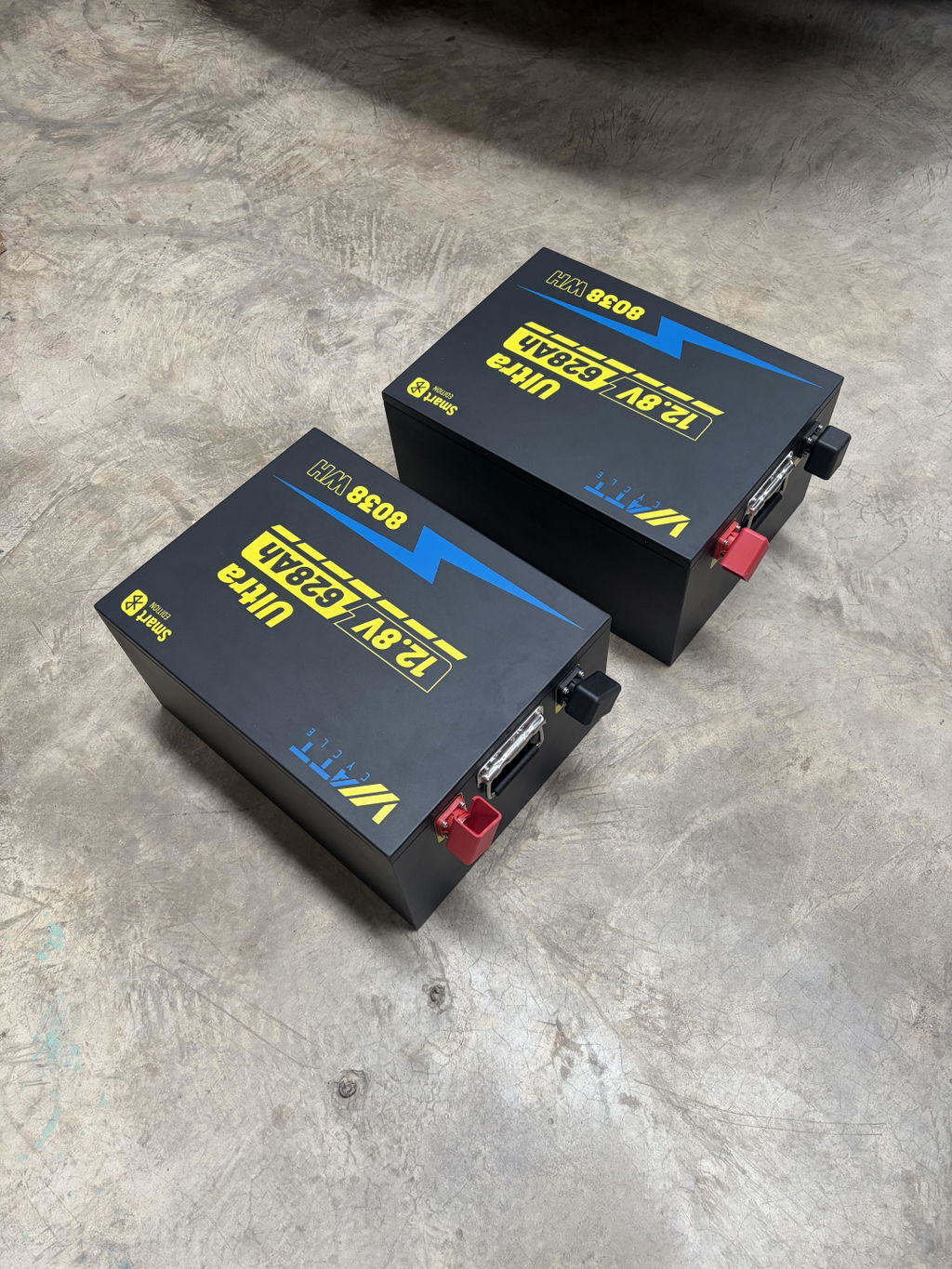
Producto de mucha calidad y que llegó en perfecto estado, las 2 baterías compradas estaban impecablemente embaladas, estoy esperando que un técnico las instale el próximo día 18 después podré seguir opinando de su funcionamiento
-
Free & Local Shipping
-
VAT Included
-
5+5 Years Warranty
-
24/7 Customer Support
WattCycle 48V 314Ah LiFePO4 Solar Battery with Active Balance & Bluetooth
- 16kWh usable energy in one battery to power your devices for one week
- Slim 450 × 240 × 989mm vertical enclosure with 110kg
- EV-grade LiFePO4 cells for long-term reliability
- 3A active balancing extends lifespan and improves efficiency
- Up to 15 years of service life with 6000+ deep cycles
- 300A smart BMS with 20+ protection functions
- CAN, RS485 and RS232 inverter communication
- Compatible with multi-brand inverters: Victron, Deye, Pylon, etc
- Bluetooth + LCD touchscreen + LED strip for real-time monitoring
- Improved heat dissipation design (+20%) for safer operation
- Supports up to 15 batteries in parallel
- 360° caster wheels for easier positioning and servicing
- Flexible installation for home, off-grid, and commercial use
Once sold out, there is currently no restock plan. Secure yours before it’s gone!
Build Your System
48V Expansion Cable for EcoFlow Delta 2/3
48V Expansion Cable for BLUETTI
48V 314Ah Parallel Cable
-
Free & Local Shipping
-
VAT Included
-
5+5 Years Warranty
-
24/7 Customer Support
Store 16.08kWh of Solar Energy in One Battery
The WattCycle 48V 314Ah LiFePO4 Solar Battery combines 51.2V, 314Ah and 16.08kWh of energy in one high-capacity battery for residential solar storage. Store surplus rooftop PV generation during the day and use the stored energy later for evening consumption, backup power or off-grid applications.
16.08kWh Capacity in a Space-Saving Vertical Design
Despite storing 16.08kWh, the battery measures only 450 × 240 × 989mm, giving it a narrow 240mm depth that helps reduce installation footprint. Four positive and four negative terminals support flexible system wiring, while integrated 360° caster wheels make the 110kg battery easier to position during installation and servicing.
15+ BMS Protections with CAN, RS485 and RS232
The 300A smart BMS provides more than 15 layers of battery protection, including over-charge, over-discharge, over-current, short-circuit and temperature protection. CAN, RS485 and RS232 communication protocols support integration with compatible inverter systems from brands including Deye, Growatt, Victron, GoodWe, SolaX, Sofar and others.
300A BMS Supports Up to 15.36kW DC Power
With a 51.2V voltage and 300A BMS, the battery supports a calculated maximum of approximately 15.36kW DC output, giving compatible inverter systems substantial power for demanding household loads. Combined with 16.08kWh of stored energy, one battery can form the core of a high-capacity solar, backup or off-grid power system.
Can the 48V 314Ah Battery Power Your Appliances?
Enter the wattage of the appliances you plan to run at the same time. We'll check the combined load and estimate how long one WattCycle 48V 314Ah battery can keep them powered.
Please contact our technical support team for help designing a suitable battery system:
support.eu@wattcycle.com
Scale from 16.08kWh to 241.15kWh
Start with a single 16.08kWh battery and expand the system as your energy requirements grow. Up to 15 WattCycle 48V 314Ah batteries can be connected in parallel, creating a maximum system of 4710Ah and approximately 241.15kWh while maintaining the same 51.2V nominal system voltage.
3A Active Balancing for Healthier Cells Over Time
The built-in 3A active balancer transfers energy between cells to reduce voltage differences and maintain better cell consistency during repeated charge and discharge cycles. Compared with passive balancing, active balancing manages cell imbalance more efficiently, helping the battery pack maintain a healthier and more consistent operating condition over long-term use.
How Long Your Solar Battery Takes to Pay Back
A 16.08kWh home battery can store surplus solar energy for use later, potentially reducing the amount of electricity purchased from the grid.
Three Ways to Monitor Your 16.08kWh Home Battery
Monitor the battery through the WattCycle Bluetooth App, integrated LCD touchscreen and LED status strip. The system gives you convenient access to battery information including state of charge, voltage, current, temperature and operating status, whether checking locally or from your smartphone.
Store More Solar Energy, Rely Less on Fossil Fuels
The WattCycle 48V 314Ah solar battery stores 16.08kWh of energy, allowing more electricity generated by rooftop solar panels to be saved for later use instead of being wasted or immediately exported. By increasing the use of renewable solar energy and reducing dependence on electricity generated from coal, oil and natural gas, battery storage can support a cleaner, lower-carbon home energy system.
Tech Specifications
| Model | 48V 100Ah Smart Home Storage |
48V 314Ah Smart Home Storage |
48V 628Ah Smart Home Storage |
|---|---|---|---|
| Battery Mode | LiFePO4 Battery | ||
| Battery Energy | 5.12kWh | 16.07kWh | 32.15kWh |
| Internal Resistance | ≤ 13.9mΩ | ||
| Single Cell Capacity | 100Ah | 314Ah | 628Ah |
| Rated Operating Voltage | 51.2V | ||
| Standard Input Current | 50A (Max.100A) | 150A (Max.300A) | 150A (Max.300A) |
| Standard Output Current | 50A (Max.100A) | 150A (Max.300A) | 150A (Max.300A) |
| Overcharge Protection | 58.4V | ||
| Overcharge Protection Recovery | 53.6V | ||
| Overdischarge Protection | 40V | ||
| Overdischarge Protection Recovery | 47.2V | ||
| Charging Overcurrent Protection | 110±10A / 1±0.5s | 310±10A / 1±0.5s | 310±10A / 1±0.5s |
| Discharging Overcurrent Protection | 110±10A / 9–12s | 310±10A / 9–12s | 310±10A / 9–12s |
| Internal Resistance Recovery Methods | a. Remove the Charger; b. Remove Loads | ||
| Power Delivery | 60% | ||
| Equalization | Active Balance | ||
| Parallel Quantity | Manual DIP Switch Setting: ≤15 units | ||
| Power Failure Self-Consumption | ≤300µA | ||
| Battery Life | 6000 Cycles @ 80% DoD | ||
| Communication Protocol | RS485, CAN, RS232 | ||
| Recommended Charging Temperature | 0°C to 55°C | ||
| Recommended Discharging Temperature | -20°C to 60°C | ||
| Dimensions (L × W × H) | 398 × 200 × 625 mm | 450 × 240 × 989 mm | 700 × 250 × 1082 mm |
| Weight | 47.50 kg ±3% | 110.00 kg ±3% | 220 kg ±5% |
Package Content
Downloads
Compatible Inverters
| Inverter Brands | Communication Ports |
|---|---|
| Afore | CAN |
| Aiswei | CAN |
| Aohai | RS485 |
| Deye | CAN |
| GOODWE | CAN |
| GROWATT | RS485/CAN |
| GT | RS485 |
| Hoymiles | CAN |
| INVT | CAN |
| LUXPOWER | CAN |
| MEGAREVO | CAN |
| MUST | CAN |
| MUST | RS485 |
| NEXT | 232 |
| PYLON TECH | RS485/CAN |
| SAJ | CAN |
| SAKO | RS485 |
| Sacolar | RS485 |
| Senergy | CAN |
| SMA | CAN |
| SOFAR | CAN |
| SOLAX | RS485/CAN |
| Solis | CAN |
| SOROTEC | CAN |
| SRNE | RS485 |
| Studer | CAN |
| Sumry | RS485 |
| SUYEEGO | RS485 |
| TBB | CAN |
| Techfine | RS485 |
| VICTRON | CAN |
| Voltronic | RS485 |
Frequently Asked Questions
Active balancing is a cell management technique that moves charge from higher-voltage cells to lower-voltage cells, keeping every cell in the pack at a similar state of charge instead of simply shedding excess energy as heat. So your battery won't get hot as soon as you start using it, like before.
At a continuous 3A rate, this balancing is strong enough to correct cell drift during normal use and to support higher, safer charge currents.
Practically, active balancing means you retain more usable capacity over the life of the battery pack, accept faster and fuller charging without hitting early cutoffs, and experience slower capacity fade so the system delivers steady performance year after year.
Without active balancing, individual cells drift to different States of Charge (SoC) over repeated cycles, which means the battery’s usable energy is effectively capped by the weakest cell; that mismatch forces earlier charge or discharge cutoffs, limits safe charge rates, reduces usable capacity, and accelerates overall ageing.
If the balancing switch is on, balancing will begin when the maximum cell voltage differential in the battery pack exceeds this value and will end when it falls below this value.
For example, if you set the balancing start voltage differential to 10mv and the balancing stop voltage differential to 5mV, balancing will begin when the cell voltage differential exceeds 10mV and end when it falls below 5mV.
The recommended balancing start voltage differential is 0.005V for cells over 50Ah, and 0.01V for cells under 50Ah.
When the lowest cell voltage is below the set value of 2000mV, active balancing will not begin, even if the cell voltage differential exceeds the set value. The balancing current represents the continuous current used to discharge the high-voltage battery and charge the low-voltage battery during energy transfer. The maximum balancing current represents the maximum current during energy transfer, which does not exceed 3A.
The difference between 1A, 2A, and 3A active balance lies in the maximum current (amperage) they can use to transfer energy between battery cells.
In essence, a higher amperage rating means the active balancer can correct imbalances more quickly and handle larger cell capacities more effectively. All types use non-dissipative energy transfer methods, meaning they are more efficient and generate less heat compared to passive balancing systems.
1. Main
The main interface displays the function options, including battery pack information, cell voltage, temperature, BMS alarm status, charge and discharge curve chart, settings and system information.
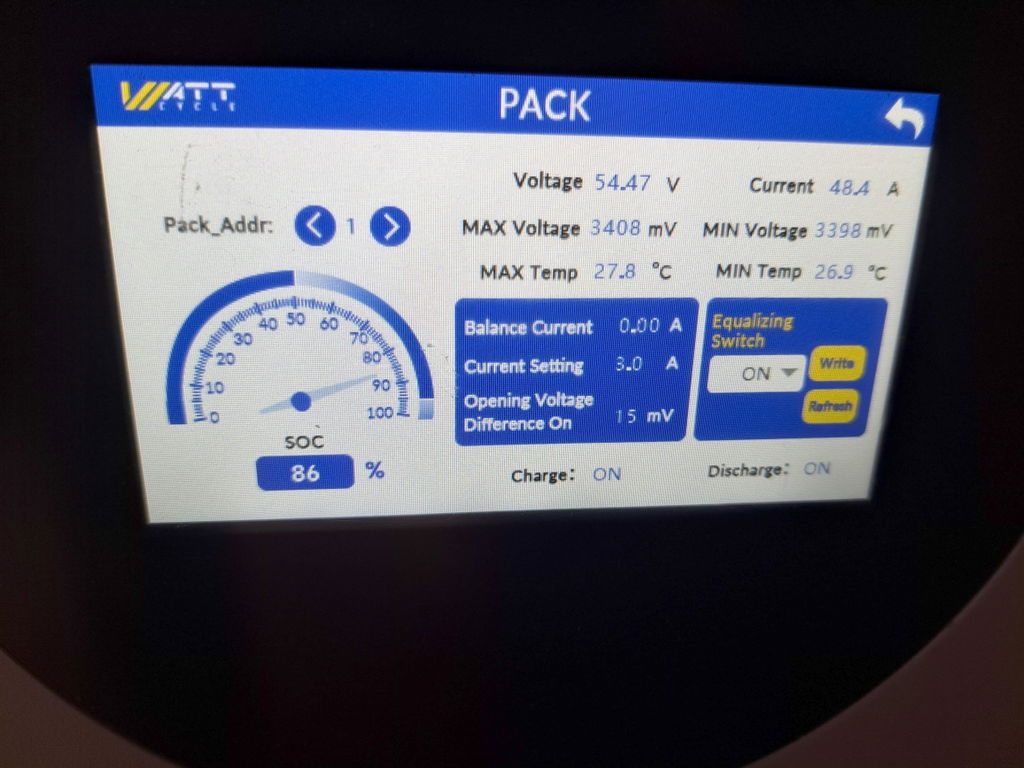
2. Pack
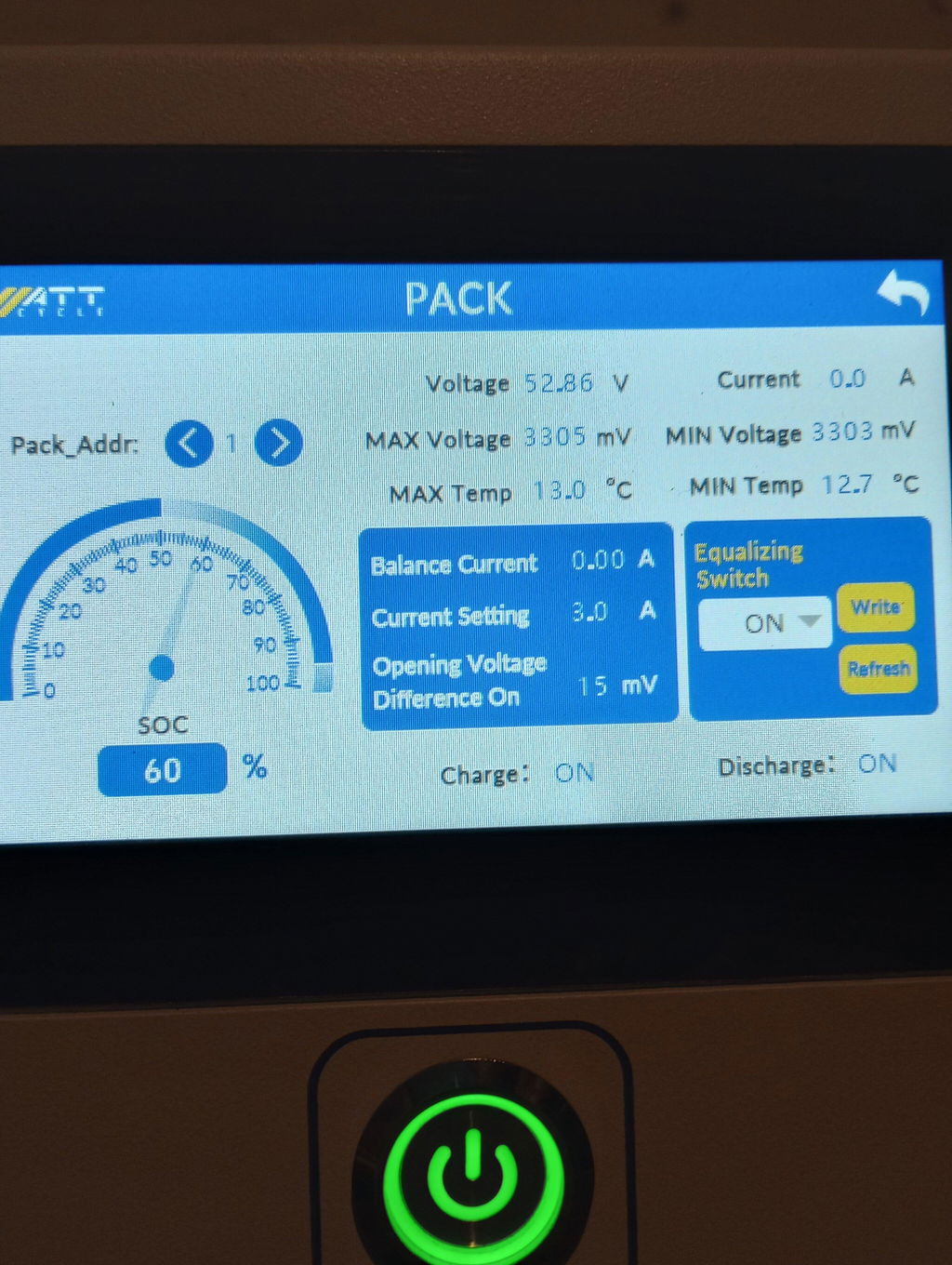
View the current system voltage, current, SOC, maximum and minimum cell voltage, temperature, balance switch and status, charge and discharge MOS status of the battery pack.
3. Cells
Check the voltage and temperature of the battery cell.
4. Alarm
Battery alarm, fault and abnormal information display to help engineers quickly analyze faults.
5. Chart
Display the voltage, current and SOC curve of the battery pack during operation.
6. Set
Set the communication protocol between the battery pack and the inverter, and the display language.
7. Product Information
Display the internal model and software version of the battery pack.
1. Cell Overcharge Protection and Recovery
When the voltage of any cell is higher than the set value of the cell overcharge voltage, and the time of duration reaches the cell overcharge delay, the system enters the overcharge protection state, the charging MOS will turn off, and the battery cannot be charged.After the cell overcharge protection, when the voltage of all cells drops below the cell overcharge recovery value, the overcharge protection state is released. It can also be released by discharge.
2. Overall Overcharge Protection and Recovery
When the overall voltage is higher than the overall over-voltage set value, and the time of duration reaches the overall overcharge delay, the system enters the overcharge protection state, turns off the charging MOS, and cannot charge the battery.When the overall voltage drops below the recovery value of the overall over-voltage protection, the overcharge protection state is released, and it can also be released by discharge.