


When buying a LiFePO4 battery for a motorhome, campervan or caravan, many customers come across the ECE R10 marking for the first time. An increasing number of manufacturers now highlight this certification, but what does it actually mean?
Is ECE R10 a general battery safety certification? Why do WattCycle batteries carry the E57 marking rather than E1? And how does ECE R10 differ from IEC 62133, CE or UN38.3? In this guide, we explain the most important points in a clear and practical way.
What Is ECE R10 Certification?
ECE R10 certification is based on UNECE Regulation No. 10. It covers the electromagnetic compatibility, commonly referred to as EMC, of vehicles and the electrical or electronic components used within them.
For a LiFePO4 battery equipped with an electronic battery management system, the assessment mainly focuses on two areas:
Electromagnetic emissions: The battery must not produce excessive electromagnetic interference that could affect other electrical systems in the vehicle.
Electromagnetic immunity: The battery and its electronic components must be sufficiently resistant to electromagnetic interference from other systems.
ECE R10 may be relevant to vehicle components such as:
- LiFePO4 batteries with an electronic BMS
- Bluetooth-enabled batteries
- DC-to-DC chargers and battery-to-battery chargers
- Inverters
- Solar charge controllers
- Other permanently installed electronic vehicle components
What Does ECE R10 Mean for Motorhome Owners?
An ECE R10 certification does not automatically mean that one battery is safer or of higher overall quality than another. It shows that the battery's electromagnetic compatibility has been assessed in accordance with the requirements of UNECE Regulation No. 10 for use in a vehicle.
For motorhome, campervan and caravan owners, this primarily means:
-
Assessed for use in a vehicle
ECE R10 certification confirms that the battery has been assessed for electromagnetic compatibility in accordance with UNECE Regulation No. 10 and is intended for use within a vehicle. -
Relevant to the complete onboard electrical system
In a motorhome, the leisure battery, DC-to-DC charger, inverter, solar charge controller and other electronic components operate alongside one another. ECE R10 testing evaluates whether the battery meets the applicable EMC requirements for this environment. -
Additional guidance when choosing a battery
In addition to capacity, BMS features, charging performance and warranty, ECE R10 certification can provide another useful selection criterion. It shows that the battery has been assessed for vehicle use under a recognised UNECE regulation. -
Especially Important for LiFePO4 Batteries Used in Vehicles Over the Long Term
While portable power stations are often used only when needed or moved between different locations, LiFePO4 leisure batteries are typically used in motorhomes, campervans and caravans over the long term and operate as part of the vehicle's onboard electrical system. This is why ECE R10 certification is particularly important for these battery systems.
ECE R10 does not replace high-quality battery cells or a reliable BMS. However, for a motorhome leisure battery, it is a useful additional consideration because it shows that the product has been assessed for electromagnetic compatibility in a vehicle environment.
Do I Absolutely Need ECE R10 When Buying a Battery?
Whether a battery requires ECE R10 approval depends on factors such as the type of vehicle, the installation method and the applicable local requirements.
For a LiFePO4 battery with an electronic BMS that will be permanently installed in a motorhome, campervan or caravan, ECE R10 is nevertheless an important indication that its electromagnetic compatibility has been assessed for vehicle use.
When comparing batteries, it is therefore worth considering ECE R10 alongside capacity, BMS performance, charging capability and warranty.
Which WattCycle Batteries Are ECE R10 Certified?
ECE R10 is particularly relevant for LiFePO4 batteries that are permanently installed in motorhomes, campervans and caravans. For this reason, WattCycle offers selected LiFePO4 batteries with ECE R10 certification for a wide range of vehicle types and installation scenarios.
This makes it easy to identify which batteries have been assessed for electromagnetic compatibility in accordance with UNECE Regulation No. 10 and are particularly suitable for permanently installed onboard electrical systems.
WattCycle ECE R10 Certified LiFePO4 Batteries for Motorhomes, Campervans and Caravans
From compact under-seat batteries to high-capacity leisure batteries, explore the complete range of WattCycle LiFePO4 batteries with ECE R10 certification, engineered to work safely with your vehicle's onboard electrical system.
Every model in this collection has been assessed for electromagnetic compatibility for vehicle use and is grouped together for easy comparison.
Why Do WattCycle Batteries Carry the E57 Mark Instead of E1?
The number following the letter "E" is not chosen by the manufacturer. It identifies the national approval authority that granted the ECE R10 type approval.
All ECE R10 certified WattCycle batteries carry the E57 marking because their ECE R10 type approval was issued by the approval authority in San Marino. If exactly the same product had been approved in Germany, the marking would instead display E1.
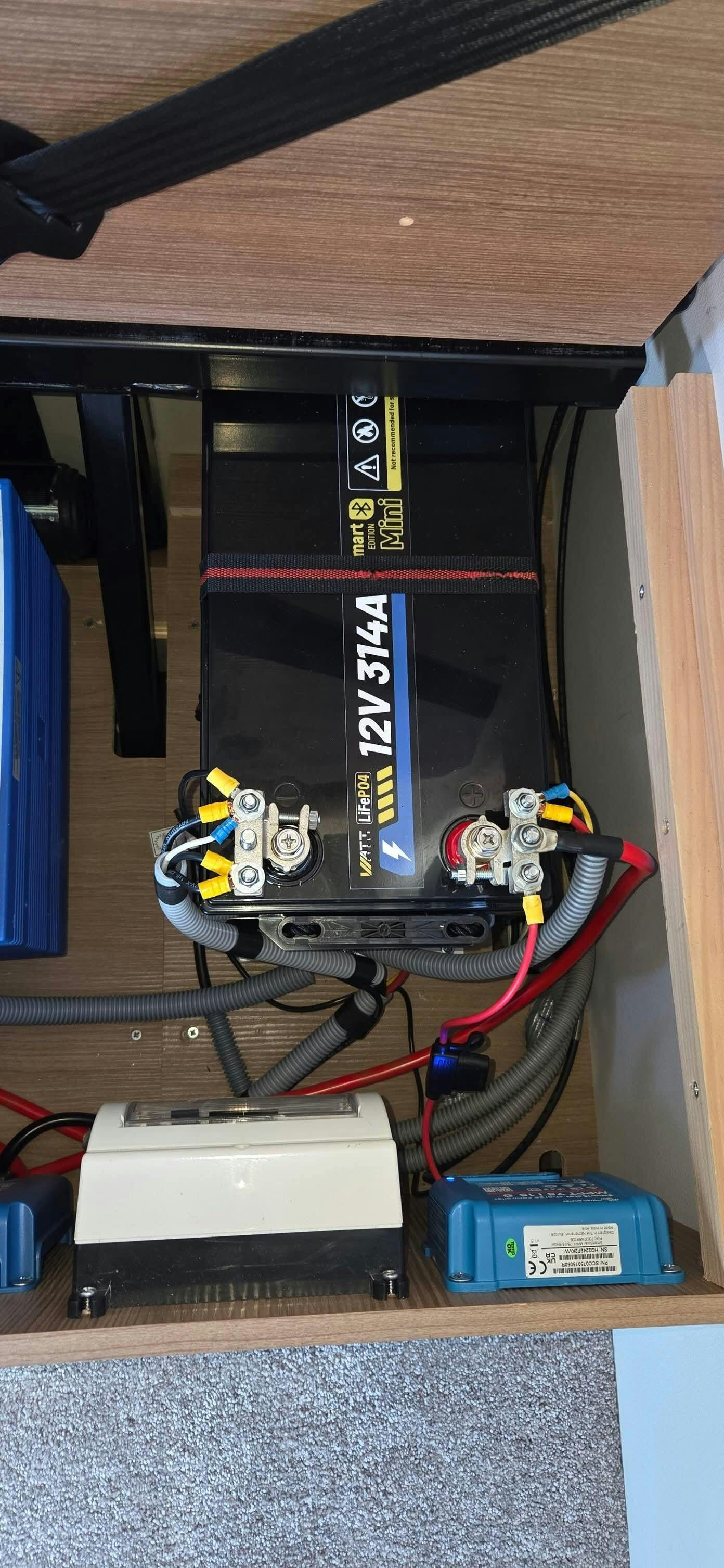
The marking on the WattCycle 12V 314Ah Underseat LiFePO4 Battery provides a good example:
ECE R10 (E57*10R06/03*2316)
Here's what each section means:
- E57 – The national approval authority. In this case, the ECE R10 type approval was issued in San Marino.
- 10R – Refers to UNECE Regulation No. 10, which covers electromagnetic compatibility (EMC).
- 06 – The amendment series (revision) under which the approval was granted.
- 2316 – The unique approval number assigned to this product type.
For the complete regulation and official marking requirements, please refer to the UNECE publication: UNECE Regulation No. 10 (Revision 6) .
View E-Mark Codes Used by Other Countries
Each UNECE member country has its own E-mark number. The number following the letter "E" simply identifies the national authority that granted the type approval. Common examples include:
- E1 – Germany
- E2 – France
- E3 – Italy
- E4 – Netherlands
- E5 – Sweden
- E6 – Belgium
- E9 – Spain
- E11 – United Kingdom
- E13 – Luxembourg
- E57 – San Marino
ECE R10 Is Just One of Several Important Certifications for LiFePO4 Batteries
A high-quality LiFePO4 battery is often tested and certified against several different standards. This is because each certification focuses on a different aspect of product quality, safety or regulatory compliance—no single certification covers everything.
For example, ECE R10 focuses on electromagnetic compatibility (EMC) in vehicles, while other certifications relate to battery safety, transportation or compliance with European regulations.
- ECE R10: Electromagnetic compatibility (EMC) for vehicle applications
- IEC 62133-2: Safety requirements for rechargeable lithium batteries
- CE: Compliance with applicable European Union legislation
- RoHS: Restriction of hazardous substances
- UN38.3: Transport testing for lithium batteries
When choosing a LiFePO4 battery, these certifications should be considered together. ECE R10 does not replace IEC 62133-2, UN38.3 or CE—each one addresses a different aspect of product safety and compliance.
For motorhome, campervan and caravan owners, it is therefore worth looking beyond battery capacity and BMS performance, and also checking whether the battery has the appropriate certifications for your intended application.
Frequently Asked Questions About ECE R10 Certification
Is ECE R10 a general battery safety certification?
No. ECE R10 focuses specifically on electromagnetic compatibility (EMC) for vehicle applications. Battery safety, transport requirements and environmental compliance are covered by other standards and regulations.
Does ECE R10 replace UN38.3?
No. ECE R10 and UN38.3 serve different purposes. ECE R10 assesses electromagnetic compatibility in a vehicle environment, while UN38.3 evaluates whether lithium batteries meet the safety requirements for transportation.
Can a LiFePO4 battery be used in a motorhome without ECE R10 certification?
Yes, in principle it can. Whether ECE R10 certification is required depends on factors such as the vehicle, the intended application and applicable regulations.
For LiFePO4 batteries that are used in a motorhome over the long term and operate as part of the onboard electrical system, ECE R10 provides important evidence of electromagnetic compatibility. For this reason, it is a worthwhile certification to consider when choosing a leisure battery.
Does ECE R10 mean the battery is of higher quality?
Not necessarily. ECE R10 only confirms that the battery has been assessed for electromagnetic compatibility in accordance with UNECE Regulation No. 10. Overall product quality also depends on factors such as battery cells, BMS design, manufacturing standards and other certifications including IEC 62133-2 and UN38.3.
Why do some batteries display E1 while others show E57?
The number after the letter "E" identifies the national approval authority that issued the ECE R10 type approval. It does not indicate a difference in product quality. For example, E1 represents Germany, while E57 represents San Marino.
Conclusion
ECE R10 certification helps you understand whether a LiFePO4 battery has been assessed for electromagnetic compatibility in a vehicle environment. While it does not replace other important certifications or determine overall battery quality, it is an important consideration for batteries that will be permanently installed in motorhomes, campervans and caravans.
When comparing leisure batteries, look beyond capacity alone. Choosing a battery with the right certifications, a reliable BMS and proven performance can help ensure a safer and more dependable onboard power system.
WattCycle offers a range of ECE R10 certified LiFePO4 batteries designed specifically for vehicle applications, giving you more confidence wherever your journey takes you.


Comments
No comments yet. Be the first to share your thoughts.
Leave a Comment