July 10, 2026
According to a recent experiment by Italian electronics creator AT Lab, the answer is yes. Instead of modifying the power station itself, he built an auxiliary LiFePO4 battery system around a Bluetti Elite 200 V2, using two WattCycle 12V 100Ah LiFePO4 batteries, a solar charge controller, a LiFePO4 charger and several monitoring devices.
The result is an independent energy storage system that can store solar energy, recover electricity during capacity testing, and recharge the power station whenever additional runtime is needed.
More importantly, this approach offers an alternative to purchasing a much larger 4–5kWh portable power station. Rather than carrying extra battery capacity everywhere, users can expand their energy storage only when necessary while keeping the original power station lightweight and portable.
Watch the video on YouTube:
How to Expand the Battery Capacity of Any Portable Power Station – Bluetti Elite 200 V2 Expansion
Original Italian title: COME AUMENTARE LA BATTERIA DI TUTTE LE POWER STATION – Estensione Bluetti Elite 200 V2
Note: Most of the guide, images and diagrams featured in this article are screenshots captured directly from AT Lab's video.
What Components Did AT Lab Use to Expand the Bluetti Elite 200 V2?
Unlike proprietary expansion batteries that only work with specific models, AT Lab's project was built using standard electrical components. Instead of replacing or modifying the Bluetti's internal battery, every component works as part of an independent auxiliary energy storage system.
The overall setup is surprisingly straightforward.
Component
Function
Bluetti Elite 200 V2
The portable power station used throughout the experiment
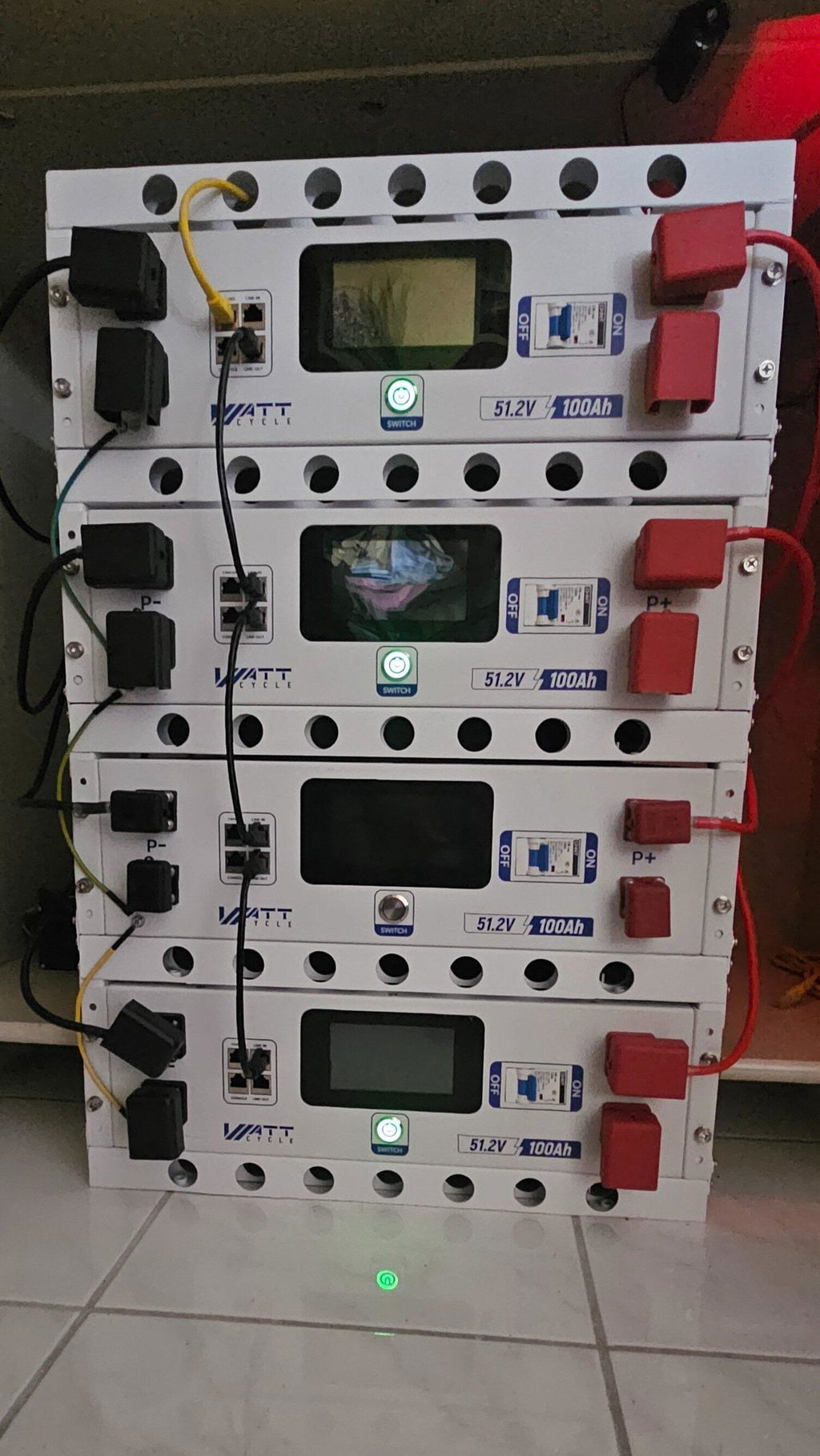
2 × WattCycle 12V 100Ah LiFePO4 Batteries
Built the auxiliary battery bank (12V 200Ah, approximately 2,560Wh)
MPPT Solar Charge Controller
Charges the WattCycle battery bank from solar panels
LiFePO4 Battery Charger
Transfers stored energy between the Bluetti and the auxiliary battery system
DC Power Meter
Monitors battery voltage, current, power and energy flow
AC Power Meter
Measures AC power output during capacity testing
Solar Panel
Supplies renewable energy to the auxiliary battery bank
Protection Devices & Wiring
Connect and protect the complete system
How Does AT Lab's Auxiliary Battery System Work?
Instead of modifying the Bluetti Elite 200 V2, AT Lab designed a standalone auxiliary energy storage system built around two WattCycle 12V 100Ah LiFePO4 batteries. The battery bank sits at the center of the system, connecting the solar charging equipment, battery charger and monitoring devices while operating independently from the power station.
The following diagram illustrates the complete system used throughout the experiment.
Step 1: Build a Standalone Auxiliary Energy Storage System
The core of the system is a 12V 200Ah battery bank created by connecting two WattCycle 12V 100Ah LiFePO4 batteries in parallel. Around this battery bank, AT Lab connected an MPPT solar charge controller, a LiFePO4 battery charger, a DC power meter and an AC power meter, creating a complete auxiliary energy storage system.
Unlike proprietary expansion batteries, the WattCycle battery bank operates completely independently of the Bluetti Elite 200 V2. It stores energy, supplies energy and communicates with the power station only through its standard charging interface.
Tip: Before connecting LiFePO4 batteries in parallel, ensure they have the same voltage and, ideally, come from the same brand, capacity and production batch for the best long-term performance.
Step 2: Store, Transfer and Reuse Energy
Once assembled, the system can operate in two different scenarios.
During normal use, solar panels charge the WattCycle battery bank through the MPPT charge controller. Whenever the Bluetti requires additional runtime, the stored energy is transferred from the WattCycle battery bank back to the power station through the LiFePO4 battery charger.
During capacity testing, the process works in reverse. After the Bluetti is fully charged, AT Lab discharges the power station and routes the output back into the WattCycle battery bank instead of wasting the energy in a conventional electrical load. Throughout the process, the DC and AC meters monitor energy flow, allowing charging and discharging performance to be measured and compared.
Step 3: WattCycle Becomes the Energy Hub
What makes AT Lab's design different is that the WattCycle battery bank performs more than one role. It acts as the central energy hub throughout the system by:
Storing energy generated by the solar panels.
Recharging the Bluetti Elite 200 V2 whenever additional runtime is needed.
Recovering energy discharged by the Bluetti during capacity testing instead of allowing it to be wasted.
This bidirectional energy flow makes the auxiliary battery system far more than a simple backup battery. It becomes the central energy storage and transfer unit, allowing solar generation, power station charging and capacity testing to work together without modifying the Bluetti itself.
Key Takeaway: AT Lab's experiment demonstrates that an auxiliary LiFePO4 battery system can do more than simply extend the runtime of a portable power station. By placing the WattCycle battery bank at the center of the system, it becomes possible to store solar energy, recharge the Bluetti when needed and recover energy during capacity testing—all while keeping the power station completely unmodified.
Why Were WattCycle LiFePO4 Batteries the Right Choice for AT Lab's Project?
AT Lab's experiment wasn't designed to compare battery brands, but the choice of WattCycle 12V 100Ah LiFePO4 batteries aligns well with the goals of the project. Three practical considerations stand out:
Expand capacity without replacing your power station: Instead of buying a larger and heavier power station, AT Lab built an independent auxiliary battery bank using two WattCycle batteries. This modular approach adds energy only when needed while keeping the original Bluetti portable for camping, RV travel and everyday use.
LiFePO4 is designed for repeated energy storage: An auxiliary battery system may be charged by solar panels during the day and recharge the power station later. LiFePO4 batteries are well suited to this type of repeated charging and discharging thanks to their long cycle life, stable voltage and high charging efficiency.
Integrated BMS provides essential protection: Throughout the experiment, AT Lab repeatedly highlights the importance of a Battery Management System (BMS). WattCycle LiFePO4 batteries include an integrated BMS that helps protect against overcharging, over-discharging, excessive current and short circuits, providing a reliable foundation for an auxiliary energy storage system.
Recommended Reading
How to Design a Reliable LiFePO4 Power System for Your Motorhome
LiFePO4 Battery Review: Gerold's Real Motorhome Electrical Setup & Experience
Sailing Yacht Power Upgrade: Anders Almskou’s LiFePO4 Off-Grid Experience
Related Questions
Can any portable power station be expanded using an auxiliary battery?
Many portable power stations can be recharged from an external battery system through their standard AC or DC charging inputs. However, charging voltage, input current and charging methods vary between manufacturers, so compatibility should always be verified before building an auxiliary battery system.
Does this modify the internal battery of the power station?
No. AT Lab's design leaves the Bluetti's internal battery completely untouched. The auxiliary WattCycle battery bank exchanges energy through the power station's existing charging interfaces, allowing the original Battery Management System to continue operating normally.
Why did AT Lab connect two batteries in parallel?
Connecting two WattCycle 12V 100Ah batteries in parallel creates a 12V 200Ah battery bank with approximately 2,560Wh of available energy while maintaining a standard 12V operating voltage. This configuration provided sufficient storage capacity without changing the overall system voltage.
Can a larger LiFePO4 battery be used instead?
Yes. AT Lab also explains that a larger-capacity battery, such as a 12V 200Ah battery or an equivalent 24V battery system, can achieve similar results provided the charger and the rest of the system are compatible.
Can the auxiliary battery also be charged with solar panels?
Yes. In AT Lab's design, the solar panel charges the WattCycle battery bank through an MPPT solar charge controller. The stored energy can then be used later to recharge the power station, making better use of available solar energy throughout the day.
Is this a better option than buying a larger power station?
It depends on how you use your system. If you need maximum battery capacity every day, purchasing a larger power station may be the simplest solution. However, if you already own a portable power station and only occasionally require additional runtime, an auxiliary LiFePO4 battery system provides a more flexible alternative. It allows you to expand available energy only when needed while keeping your existing power station compact, portable and ready for travel.
Final Thoughts
AT Lab's experiment demonstrates that expanding the available energy of a portable power station doesn't always require replacing it with a larger model. By combining a Bluetti Elite 200 V2 with an independent WattCycle LiFePO4 battery bank, he showed how additional energy can be stored, recovered and reused through standard charging interfaces—without modifying the power station itself.
For users looking to get more from the power station they already own, this modular approach offers a practical balance between portability and capacity. Whether the goal is storing excess solar energy, extending backup runtime, supporting RV travel or building a flexible home energy system, a WattCycle LiFePO4 battery can serve as the foundation of an auxiliary energy storage solution that grows with your energy needs instead of replacing the equipment you already have.