


Par WattCycle 48V 100Ah 3U serverrackbatteri med WattCycle 48V udvidelseskabel at udvide et kompatibelt EcoFlow DELTA 2- eller DELTA 3-kraftværk med 5,12 kWh ekstra energilagring. Denne kombination giver mere udvidelseskapacitet til en lavere pris pr. kilowatt-time end de officielle EcoFlow DELTA Smart Extra Batteries, der sammenlignes i denne artikel.
Hvorfor fungerer WattCycle 48V 100Ah rackbatteriet med EcoFlow DELTA 2 og DELTA 3?
Kombinationen fungerer, fordi WattCycle 48V udvidelseskablet er designet til den ekstra batteriport på understøttede EcoFlow Delta 2/3-modeller, mens rackbatteriet fungerer på en kompatibel spændingsplatform.
- Kompatibel ekstra batteriport: WattCycle 48V udvidelseskabel forbinder WattCycle-stativbatteriet direkte til den XT150-kompatible ekstra batteriport på et understøttet EcoFlow-strømværk.
- Kompatibel spændingsplatform: WattCycle-batteriet har en nominel spænding på 51,2 V, hvilket matcher LiFePO4-spændingsplatformen, der bruges af de understøttede DELTA 2- og DELTA 3-modeller.
Der kræves ingen yderligere inverter, når batteriet udelukkende bruges til at udvide lagerkapaciteten.
Kan mere end ét WattCycle Rack-batteri bruges til at udvide Eco Flow DELTA 2 eller 3?
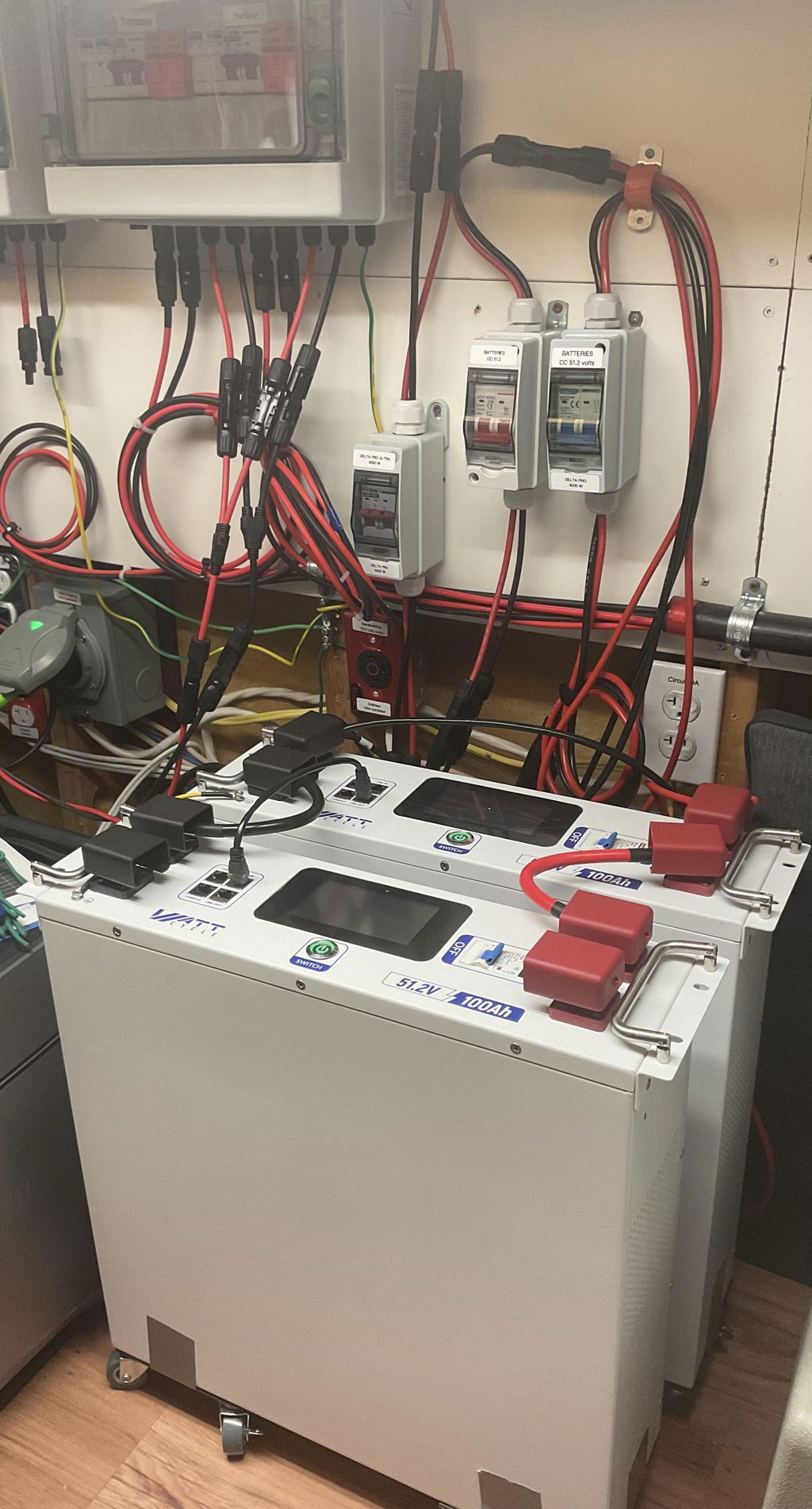
Et rackbatteri tilføjer 5,12 kWh, men lagerkapaciteten behøver ikke at stoppe der. Hvis der kræves mere energi, kan identiske WattCycle 48V 100Ah rackbatterier tilsluttes. parallelt eller i serie, med forbehold for batterimanualen og kravene til den komplette installation. En parallel batteribank øger den tilgængelige kapacitet i ampere-timer og kilowatt-timer, samtidig med at den nominelle systemspænding holdes på 51,2 V.
Før du bygger en multibatteribank, skal du bekræfte det tilladte antal parallelle batterier, bruge matchende batterier og passende beskyttelse, og få designet kontrolleret af en kvalificeret installatør.

Hvilke EcoFlow DELTA-modeller er kompatible?
- EcoFlow DELTA 2
- EcoFlow DELTA 2 Max
- EcoFlow DELTA 3
- EcoFlow DELTA 3 Plus
- EcoFlow WAVE 3
WattCycle-stativbatteri med WattCycle 48V-udvidelseskabel vs. et EcoFlow Extra-batteri
Et officielt EcoFlow ekstrabatteri er fuldt integreret i EcoFlow-økosystemet. Dets opladningstilstand og andre batterioplysninger kan overvåges centralt, og dets kabinet er designet til mobil brug med det tilhørende strømforsyningsanlæg.
WattCycle 48V 100Ah 3U serverrackbatteriet med WattCycle 48V udvidelseskabel fokuserer på høj lagerkapacitet og en lavere pris pr. kilowatt-time. Det er bedst egnet til brugere, der primært opbevarer batteriet i en sikker, fast position.
| Sammenligning | WattCycle-stativbatteri med WattCycle 48V-udvidelseskabel | Officielt EcoFlow Extra-batteri |
|---|---|---|
| Systemintegration | Uafhængig tredjepartsløsning | Fuldt integreret i EcoFlow-økosystemet |
| Øget kapacitet | 5.12 kWh pr. rackbatteri, med mulighed for parallel udvidelse | Afhænger af modellen |
| Overvågning | LCD-, Bluetooth- og WattCycle-app | EcoFlow-systemet |
| Mobilitet | Bedre egnet til en sikker, fast position | Designet til mobil brug |
| Omtrentlig pris pr. kWh | €171.99 pr. kWh | Mindst €399 pr. kWh, afhængigt af modellen |
Baseret på de kapaciteter og priser, der blev sammenlignet på udgivelsestidspunktet, giver kombinationen af WattCycle-batteriet og WattCycle 48V-udvidelseskablet 5,12 kWh ekstra lagerplads ved ca. €171.99 pr. kWh. Dette er betydeligt lavere end prisen pr. kilowatttime for de officielle EcoFlow ekstrabatterier, der er inkluderet i sammenligningen.
Prissammenligning på udgivelsestidspunktet. Detailpriser og kampagner kan ændres.
Note: Denne WattCycle-produktkombination er en uafhængig tredjepartsløsning. Den er ikke fremstillet, anbefalet eller godkendt af EcoFlow.
Sådan tilslutter du WattCycle Rack-batteriet til en EcoFlow DELTA
WattCycle-batteriet og EcoFlow-strømforsyningen udveksler ikke batteridata direkte. Energioverførslen bestemmes af deres aktuelle spændinger. Når spændingen på batteriforsyningen er højere, strømmer energien til EcoFlow. Når strømforsyningen stiger under opladning, kan energien strømme til batteriforsyningen.
- Tjek kompatibilitet: Sørg for, at din EcoFlow-model vises på kompatibilitetslisten ovenfor.
- Kontrollér spænding og polaritet: Sluk begge enheder, og kontroller den faktiske spænding samt de positive og negative terminaler. WattCycle anbefaler en spændingsforskel på højst 1 V før tilslutning.
- Tilslut WattCycle 48V udvidelseskabel: Fastgør M8-ringterminalerne til rackbatteriet, og tilslut derefter den anden ende af kablet til EcoFlow-ekstrabatteriporten.
- Tjek systemet: Tænd begge enheder i henhold til deres instruktioner. Kontroller derefter spændingen og energiflowet på batteridisplayet på stativet.

Den viste ladetilstand behøver ikke at være identisk på begge enheder. Den faktiske spænding er det vigtigste. Lignende ladeniveauer er blot med til at reducere en stærk initial energistrøm efter tilslutning.
Relateret vejledning: Hvor meget koster et hjemmebatteri
WattCycle Rack-batteri med EcoFlow DELTA 2 i en YouTube-test i den virkelige verden
Marc fra YouTube-kanalen “Marc testet...” demonstrerer, hvordan WattCycle-stativbatteriet tilsluttes en EcoFlow DELTA 2 via et WattCycle 48V-udvidelseskabel, og viser, hvordan energioverførsel fungerer i hverdagen.
Testen bekræfter energioverførsel i begge retninger. EcoFlow kan stadig oplades via en 230V AC-stikkontakt eller dens solcelleindgang.
En ægte kundeanmeldelse fra Judge Me
"En stærkt anbefalet og overkommelig integration"
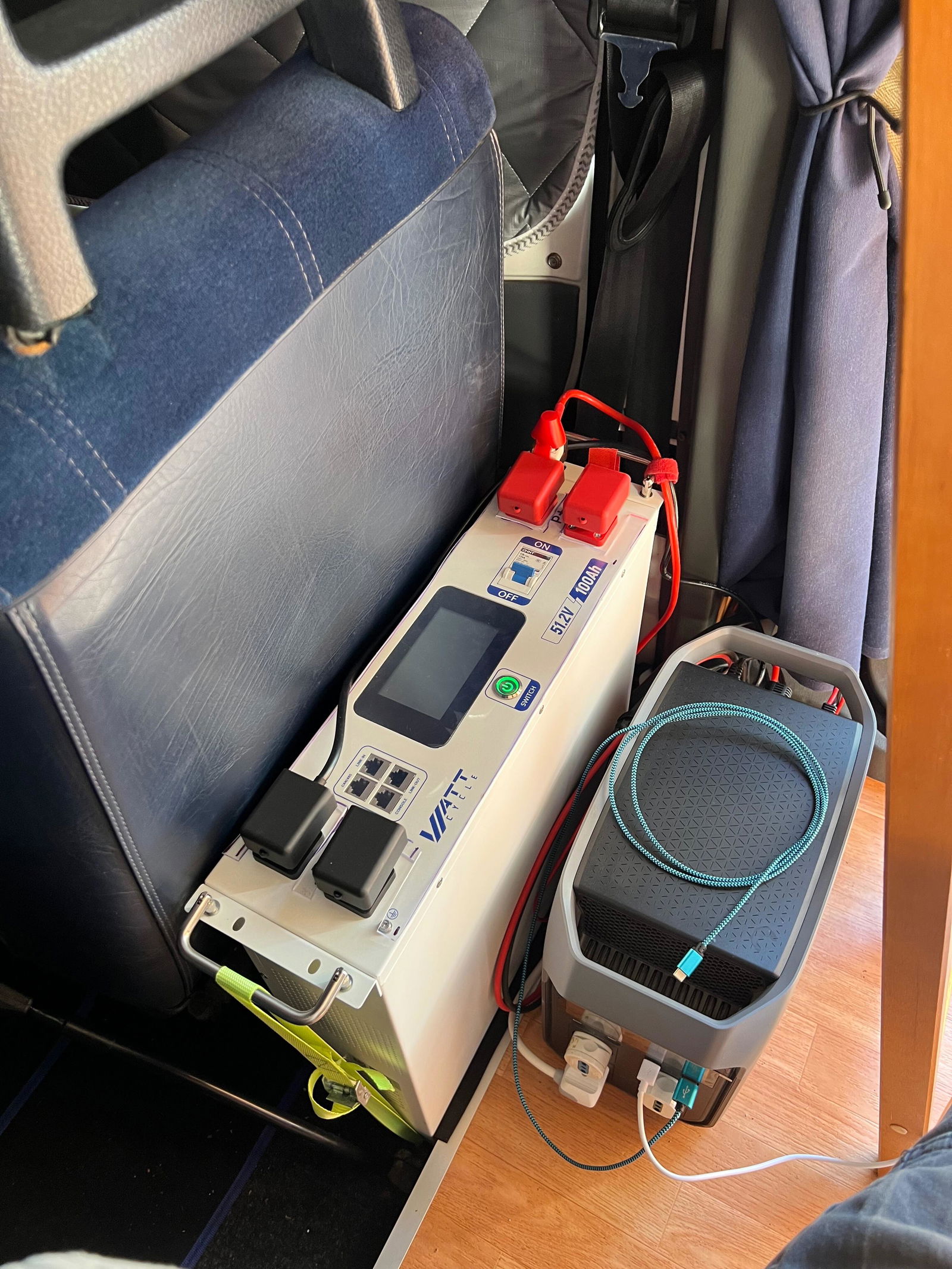
"Jeg købte 48V solcellebatteriet og tilsluttede det til mit 1kWh EcoFlow DELTA 3-kraftværk ved hjælp af det kabel, som WattCycle leverede gratis. Jeg installerede hele systemet i min campingvogn. Det er en fremragende løsning, og det giver mig nu enestående driftstid med ægte integreret drift til en meget lav totalpris."
EcoFlow-strømforsyningen oplades af et solpanel på campingvognens tag, som producerer 370 W i fuldt sollys og oplader hele systemet. Installationen blev omhyggeligt planlagt, så batteriet kunne monteres sikkert og beskyttes mod stød inde i campingvognen.
Hvad viser EcoFlow-appen?
Da WattCycle-batteriet til bagagebæreren og EcoFlow-strømforsyningen ikke kommunikerer batteridata direkte, vises bagagebærerbatteriet ikke i EcoFlow-systemet på samme måde som et officielt ekstrabatteri.
EcoFlow viser den strøm, der ankommer til dens ladeindgang. EcoFlow-appen viser dog muligvis ikke den fulde mængde energi, der efterfølgende overføres til rackbatteriet.
Batteriets ladetilstand, spænding, strøm og temperatur kan kontrolleres via det integrerede LCD-display eller WattCycle-appen. EcoFlow- og WattCycle-ladetilstandsaflæsningerne kan derfor variere fra tid til anden.
Hvordan kan det udvidede EcoFlow-system oplades?
- Oplad EcoFlow fra en 230V stikkontakt: Oplad kraftværket fra nettet som normalt. Energi kan også tilføres det tilsluttede rackbatteri.
- Oplad EcoFlow med solpaneler: Hold solpanelerne tilsluttet kraftværkets solindgang. Under opladning kan energi også lagres i rackbatteriet.
- Oplad batteristativet separat: Når WattCycle-batteriet oplades med en passende 48V-oplader eller et kompatibelt solcelleanlæg, kan den tilsluttede EcoFlow også modtage energi.
Energifordelingen afhænger af den aktuelle spænding på begge enheder. Deres viste opladningsniveauer kan derfor variere under opladning.
Hvor meget længere kan EcoFlow køre med 5,12 kWh batteriet?
Køretid i timer = nominel kapacitet i Wh ÷ strømforbrug i watt
Følgende tabel sammenligner en EcoFlow DELTA med 1.024 Wh før og efter tilføjelse af 5.120 Wh WattCycle-batteriet til bagagebæreren.
| Gennemsnitligt forbrug | Kun EcoFlow DELTA 1.024 Wh |
Tilføjet kørselstid 5.120 Wh |
Samlet køretid 6.144 Wh |
|---|---|---|---|
| 100W | Cirka 10,2 timer | Cirka 51,2 timer | Cirka 61,4 timer |
| 300W | Cirka 3,4 timer | Cirka 17,1 timer | Cirka 20,5 timer |
| 500W | Cirka 2 timer | Cirka 10,2 timer | Cirka 12,3 timer |
| 1.000 W | Ca. 1 time | Cirka 5,1 timer | Cirka 6,1 timer |
Disse er teoretiske estimater. Invertertab, standbyforbrug, temperatur og beskyttelsesreserver er ikke inkluderet.
Hvem er denne kombination af WattCycle-batteri og WattCycle 48V-udvidelseskabel til?
Det er et godt match, hvis du:
- har brug for yderligere 5.12 kWh lagerkapacitet
- ønsker at holde prisen pr. kilowatt-time lav
- ejer allerede en kompatibel EcoFlow DELTA 2 eller DELTA 3
- brug for længere nødstrøm eller mere off-grid-driftstid
- kan installere batteriet i en sikker og hovedsageligt fast position
Et officielt EcoFlow ekstrabatteri kan være bedre egnet til dig, hvis du:
- transporter hele systemet ofte
- brug for et kompakt udvidelsesbatteri
- vil se alle batteridata direkte i EcoFlow-økosystemet
- kun brug for en lille mængde ekstra kapacitet
Sikker installation og brug
WattCycle-batteriet måler 485 × 450 × 133 mm, vejer 41,7 kg og har en IP20-kapsling. Installer det på et tørt, beskyttet og stabilt sted.
- brug den kun med eksplicit kompatible EcoFlow-modeller
- Brug kun WattCycle 48V udvidelseskablet med de angivne WattCycle 48V-batterier
- Kontrollér spænding og polaritet før den første tilslutning
- Oplad ikke batteriet under 0°C
- Undlad at ændre kablet, stikkene eller terminalerne
- sikre batteristativet mod at glide, vælte og støde
Ved brug i campingvogn, båd eller hjem skal du kontrollere, om installationen er dækket af din eksisterende forsikring, og om lokale installationskrav gælder.
Ofte stillede spørgsmål
Er WattCycle-batteriet til bagagebæreren et officielt EcoFlow-ekstrabatteri?
Nej. WattCycle 48V 100Ah 3U serverrackbatteriet og WattCycle 48V udvidelseskablet udgør en uafhængig tredjepartsløsning. De er ikke fremstillet, anbefalet eller godkendt af EcoFlow.
Kan jeg tilslutte et hvilket som helst 48V-batteri til en EcoFlow DELTA?
Nej. Den nominelle spænding, driftsspændingsområdet, cellekemien, polariteten og stikket skal alle være kompatible med kraftværket. WattCycle 48V udvidelseskablet blev udviklet og testet til kompatible WattCycle 51,2V LiFePO4-batterier med M8-terminaler.
Skal EcoFlow- og WattCycle-batteriet have samme opladningstilstand?
Nej. Den faktiske spænding er den afgørende faktor. WattCycle anbefaler en spændingsforskel på højst 1V før tilslutning. Lignende opladningsniveauer reducerer blot den indledende energistrøm, efter at enhederne er tilsluttet.
Vises WattCycle-batteriet i EcoFlow-appen?
Den er ikke fuldt integreret i EcoFlow-systemet som et officielt ekstrabatteri. Batteridataene kan overvåges på det integrerede LCD-display og via WattCycle-appen.
Hvilken samlet kapacitet vil jeg have?
Et rackbatteri tilføjer 5,12 kWh. Kombineret med et 1.024 Wh kraftværk er den nominelle total 6.144 Wh. Med et 2.048 Wh EcoFlow kraftværk stiger den nominelle total til 7.168 Wh. For en større målkapacitet kan identiske rackbatterier tilsluttes parallelt, når den komplette installation følger WattCycles krav. Serieforbindelse må ikke anvendes til denne EcoFlow-applikation.
Konklusion
WattCycle 48V 100Ah 3U serverrackbatteriet med WattCycle 48V udvidelseskabel tilføjer 5,12 kWh lagerplads til en kompatibel EcoFlow DELTA 2 eller DELTA 3. Brugere, der har brug for endnu mere kapacitet, kan planlægge en parallel bank af identiske rackbatterier, samtidig med at de bevarer den kompatible 51,2V spændingsplatform. Dette gør løsningen særligt nyttig til længere backup- eller off-grid-driftstid, når batterierne kan installeres sikkert i en fast position.
Sammenlignet med de officielle EcoFlow ekstrabatterier, der er inkluderet i denne artikel, giver WattCycle-kombinationen mere kapacitet til en lavere pris pr. kilowatt-time.Den rigtige campingvognsinstallation viser også, hvordan den kan fungere med et tagmonteret solpanel for at understøtte udvidet brug off-grid.


Comments
No comments yet. Be the first to share your thoughts.
Leave a Comment