


The quality of a LiFePO4 battery is determined, above all else, by the cells inside it. Cells are the core building blocks of any lithium battery, and they are also its single most expensive component. This is why two batteries with nearly identical external dimensions and similar spec sheets can carry very different price tags. The gap almost always comes down to cell origin, cell grade, and cell specifications. Understanding these three factors gives you a much clearer picture of what you are actually buying, and why it matters for the long term.
Table of Contents
- Why Do Battery Cells Determine the Price of LiFePO4 Battery?
- What Are the Main Cell Formats Used in LiFePO4 Batteries?
- Which Cell Manufacturers Are Considered Industry Leaders?
- What Is the Difference Between Grade A Cells and Lower-Grade Cells?
- How Do Cell Parameters Affect Real-World Battery Performance?
- How Do You Identify a High-Quality LiFePO4 Battery Before Buying?
- Conclusion
Why Do Battery Cells Determine the Price of LiFePO4 Battery?
When you look at the internal structure of a LiFePO4 battery, the cells account for the largest share of the total material cost, typically well above half the production cost of the finished unit. The battery management system (BMS), casing, cabling, and connectors are all necessary, but none of them come close to the cost of the cells themselves.
Every performance metric that appears on a battery's specification sheet traces back to the cells inside. Capacity, cycle life, efficiency, operating temperature range, charge and discharge rates, all of these figures are only as good as the cells that underpin them. A battery built on weak or inconsistent cells cannot deliver strong, stable performance regardless of how well everything else is engineered around them.
This is where many buyers get caught out. Two batteries can share the same rated voltage, the same Ah figure, and even the same physical dimensions, yet perform very differently over time. The spec sheet describes the battery as it should behave under ideal conditions with quality cells. It does not tell you what grade the cells are, who manufactured them, or how consistently they were tested before assembly. Those details live inside the pack, out of sight.
What Are the Main Cell Formats Used in LiFePO4 Batteries?
LiFePO4 batteries are built using one of three cell formats: prismatic, cylindrical, or pouch. Each format has a distinct physical structure, and each comes with its own set of practical trade-offs.
- Prismatic cells are rectangular and rigid, housed in a hard aluminium or steel shell. They are the most widely used format in stationary energy storage, solar batteries, and deep cycle applications. Their flat geometry makes them easy to stack and assemble into large-format battery packs, and the hard casing provides good structural protection. Prismatic LiFePO4 cells are the format most buyers will encounter in home energy storage and off-grid battery systems. Also, this is the main format of the WattCycle battery.
- Cylindrical cells are the familiar round format, produced in standardised sizes such as 26650 or 32700. They have a long manufacturing history, which means production tolerances are well established. However, assembling large capacity battery packs from cylindrical cells requires connecting many individual cells in parallel and series configurations, which adds complexity to the pack design and the BMS requirements.
- Pouch cells are wrapped in a flexible laminate film rather than a rigid casing, which allows them to be very thin and lightweight. They offer high energy density per unit of weight, but the absence of a hard outer shell makes them more vulnerable to physical damage and swelling over time if not properly managed within the battery enclosure.
Which Cell Manufacturers Are Considered Industry Leaders?
The quality and consistency of cells vary significantly between manufacturers. A handful of names appear repeatedly in reputable battery products, and knowing who they are helps when reviewing product specifications or asking suppliers about cell sourcing.
- CATL is currently the world's largest lithium battery cell manufacturer by volume. CATL supplies cells to major electric vehicle manufacturers globally and has invested heavily in LiFePO4 cell development. Their cells are held to tight consistency standards at scale.
- BYD is both a battery manufacturer and a vehicle manufacturer. Their Blade battery technology, which uses elongated prismatic LiFePO4 cells, has drawn significant attention for its structural integrity and thermal performance. BYD battery cells are used in both automotive and stationary storage applications.
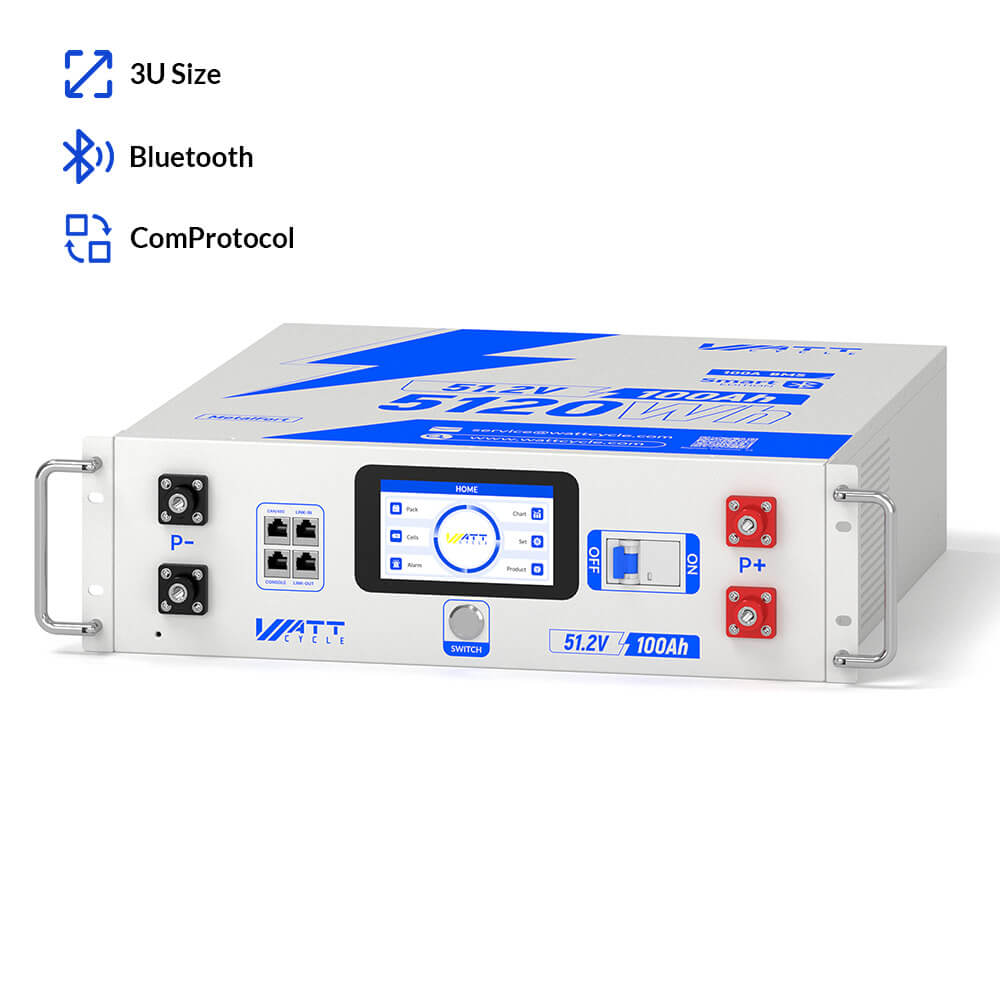
48V 100Ah Sever Rack Battery with BYD Cells
- EVE Energy is a well-established Chinese cell manufacturer with a strong presence in the LiFePO4 market, particularly for large-format cylindrical and prismatic cells used in energy storage systems. EVE LiFePO4 cells are widely used by battery pack assemblers globally.
- REPT is a newer manufacturer that has grown quickly in the stationary storage segment, offering prismatic cells with competitive specifications for energy density and cycle life.
- Cornex is another cell supplier present in the LiFePO4 supply chain, focused on prismatic cell formats for energy storage applications.
For European buyers, seeing any of these names listed transparently in a product's cell sourcing information is generally a positive indicator. Manufacturers that are reluctant to disclose their cell supplier are worth approaching with caution.
📚 Recommended Reading
- Looking to dive deeper into battery metrics? Try our online MWh to kWh converter to easily compare capacities.
- Planning a compact solar setup? Read our guide on Balcony Solar Systems with Battery Installation.
- Budgeting for energy independence? Check out How Much Does a Home Battery Cost?
What Is the Difference Between Grade A Cells and Lower-Grade Cells?
The term "Grade A" in the battery industry refers to cells that meet the original manufacturer's full specifications for capacity, internal resistance, and cycle life, with consistent performance across the production batch. These are cells that have passed quality control at every stage and are sold as first-run, certified units.
Lower-grade cells, often referred to as Grade B, are cells that did not meet Grade A thresholds during production testing. They may have slightly lower actual capacity than rated, higher internal resistance, or greater variation between individual cells in a batch. Some lower-grade cells in the market are also reconditioned or pulled from other applications.
The practical consequence of using lower-grade cells in a battery pack is that individual cells within the pack will not behave uniformly. Even a well-designed BMS will struggle to manage a pack where cells have inconsistent internal resistance or capacity. The result is accelerated degradation, reduced usable capacity over time, and in some cases, shorter overall battery life than the rated cycle count would suggest.
Battery cell quality is therefore not just a performance issue; it is a reliability issue. A pack built with Grade A cells from a verified manufacturer will behave predictably over thousands of cycles in a way that a lower-grade pack simply cannot guarantee.
How Do Cell Parameters Affect Real-World Battery Performance?
Understanding a few key cell parameters makes it much easier to compare products honestly and set realistic expectations for how a battery will perform in daily use.
- Nominal capacity (Ah) tells you how much charge a cell can store. In a finished battery, this figure is only as reliable as the consistency of the cells inside. Grade A cells will deliver capacity very close to the rated figure throughout their service life.
- Internal resistance (mΩ) is one of the more telling parameters. Lower internal resistance means less energy is lost as heat during charging and discharging, which translates directly to better efficiency and less thermal stress on the pack. Higher internal resistance, often a characteristic of aged or lower-grade cells, reduces performance and generates more heat.
- Self-discharge rate refers to how much charge a battery loses when sitting unused. LiFePO4 chemistry has one of the lowest self-discharge rates among lithium battery types, typically around 2 to 3 percent per month under normal storage conditions. High-quality cells maintain this low rate consistently.
- Operating temperature range is particularly relevant for buyers in Northern and Central Europe. Quality LiFePO4 cells typically support discharge down to around -20°C, though charging at sub-zero temperatures requires either a battery with a built-in heating function or careful management to avoid damaging the cells.
- Rated cycle life indicates how many full charge and discharge cycles a cell is designed to handle before its capacity drops to 80 percent of the original rated value. Reputable Grade A LiFePO4 cells are generally rated for 2,000 to 6,000 cycles depending on the manufacturer and depth of discharge. Cycle life claims on batteries using unverified cells should be treated with scepticism.
How Do You Identify a High-Quality LiFePO4 Battery Before Buying?
A few practical checks go a long way when evaluating a battery purchase.
Start with cell transparency. Reputable manufacturers will clearly state which cells their batteries use and will name the cell manufacturer. If a product listing is vague about cell origin, that ambiguity is worth taking seriously.
Check for relevant certifications. In the European market, CE marking is a basic requirement for legally selling energy storage products. UN38.3 covers transportation safety testing for lithium batteries. IEC 62619 sets out safety requirements for secondary lithium cells and batteries used in industrial and stationary applications. If you are installing a LiFePO4 battery in a motorhome, camper van, or other road vehicle, ECE R10 is also worth looking into. This is a UNECE regulation that addresses electromagnetic compatibility (EMC) for vehicles and their electrical components. For vehicle-based battery installations in Europe, ECE R10 compliance is a relevant indicator that the product has been evaluated in the context of a real automotive electrical environment, not just tested in isolation. These certifications do not guarantee cell quality on their own, but their absence is a red flag.
Look for Grade A cell claims backed by documentation or third-party testing, rather than marketing statements alone. A manufacturer that is confident in its cell sourcing will generally be willing to provide supporting information.
At WattCycle, all batteries are built using Grade A LiFePO4 cells, and we are transparent about our cell sourcing because we believe that is simply what responsible manufacturing looks like.
Conclusion
When comparing LiFePO4 batteries, the price differences you see between products are rarely accidental. They trace back, almost without exception, to decisions made about cell quality. Knowing what cell format a battery uses, who manufactured those cells, whether they are Grade A, and what parameters they carry puts you in a genuinely stronger position as a buyer. The spec sheet on the outside of a battery only tells part of the story. What is inside the pack is what determines how well it performs and how long it lasts.


![[Buying Guide] WattCycle Battery Black Friday Deals 2025](http://eu.wattcycle.com/cdn/shop/articles/WattCycle_Black_Friday_Battery_Sale_Blog_b6317472-80a2-4376-8d0f-1c58beaec39a.jpg?v=1763611054&width=200)


Comments
No comments yet. Be the first to share your thoughts.
Leave a Comment